3D Printing Service Perth and WA Businesses
3d printing perth makes prototypes, spare parts and short production runs for Perth and WA businesses. Upload a CAD file, get an instant quote, and choose from FDM, SLA, SLS, MJF, PolyJet or metal printing, including engineering materials such as ULTEM, PEEK and titanium. Parts are made in Australia and delivered to your site, and our CAD and FEA team can check, repair or redesign a file before anything is printed.
Trusted by Australian Organisations


3D Printing Services Available in Perth
Each process suits a different job. FDM (material extrusion) is the cost-effective choice for larger parts and fixtures. SLA (vat photopolymerisation) gives fine detail and smooth surfaces. SLS, MJF and metal printing (powder bed fusion) produce strong functional parts, and PolyJet (material jetting) handles multi-material and colour models. The names in brackets are the process categories used in the ISO/ASTM 52900 standard. Not sure which suits your part? Upload it and we will recommend one.
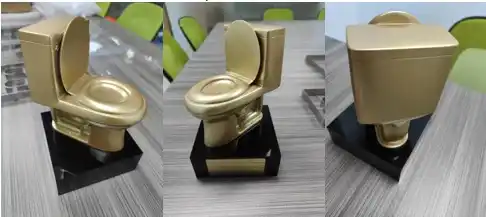
3d Printed Trophies
Branded trophies and awards for WA companies, clubs and events, printed to your design and available with a chrome finish.
Exhibition Models
Product and equipment replicas for expos and sales meetings, including scaled-down machinery too big to bring along.
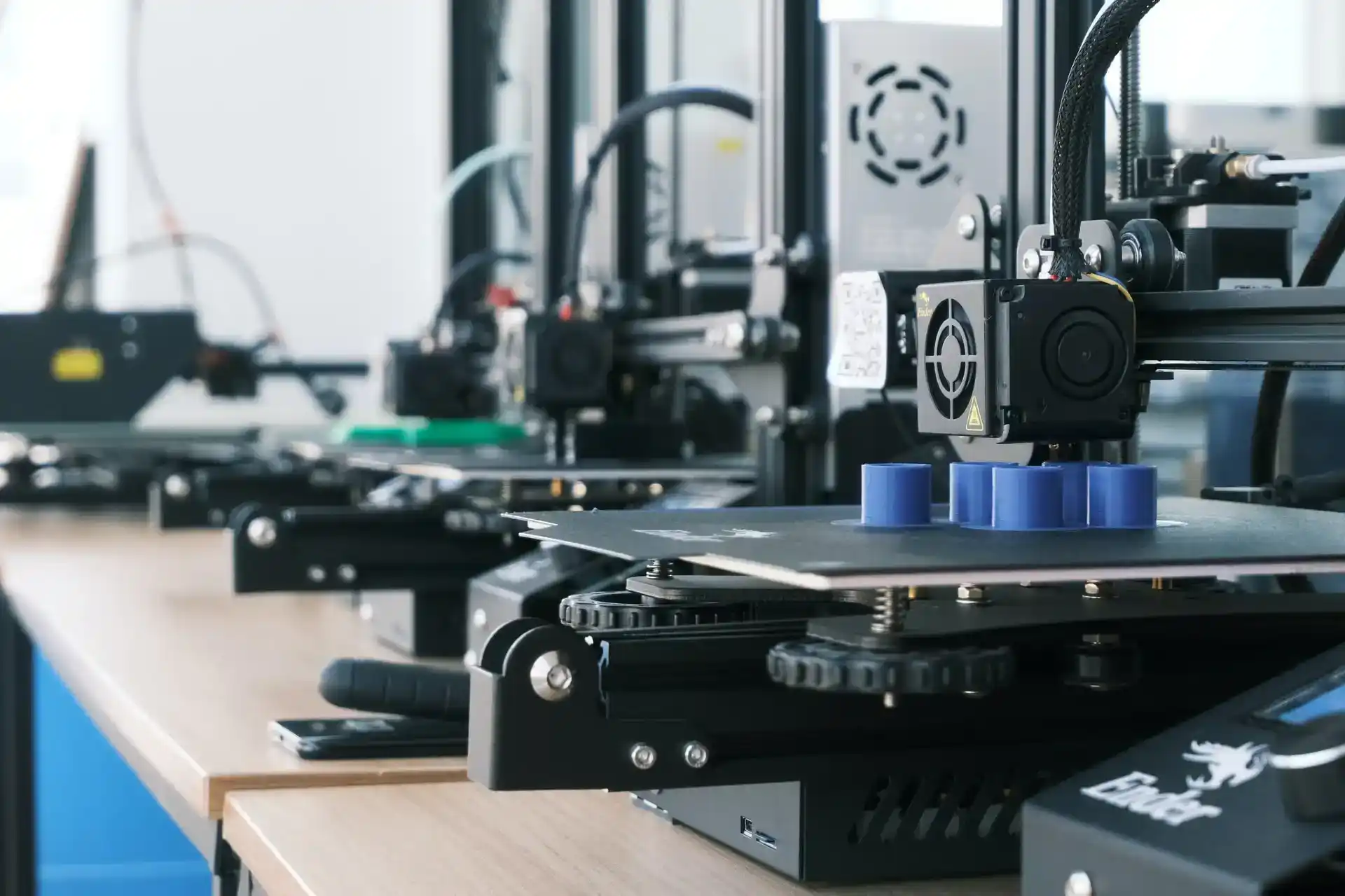
FDM 3d Printing
Economical parts in ASA, PETG, nylon, polycarbonate, ULTEM or PEEK. A good fit for brackets, guards, jigs and larger prototypes.
SLA Printing
High-detail resin parts with a smooth finish, used for presentation models, clear covers and small precise components.
CNC Machining
When a part needs tight tolerances on many faces or a specific metal grade, machining can be the better route.
SLS 3d Printing
Durable nylon parts with no support marks, suited to clips, housings, ducting and batches of identical parts.
Vacuum Casting
Silicone-mould copies in polyurethane for runs of production-like parts, a common step between prototype and tooling.
Metal 3D Printing
316 stainless, aluminium and titanium parts for complex, weight-saving designs and hard-to-machine geometry.
Polyjet Printing
Multi-material prints that combine rigid, flexible and clear areas, plus full-colour models for marketing and design reviews.
Carbon Fiber
Carbon-fibre filled nylon that is stiff, light and tough, often used for tooling, drone frames and machine guards.
Polymer Printing
Engineering polymers like PEEK and ULTEM for parts that sit near heat, chemicals or electrical equipment.
Chrome Plating
In-house decorative and hard chrome plating for metal parts, moulded plastics and 3D prints, done by our own team.
Chocolate Moulding
Custom chocolate moulds for WA confectioners, cafés and brands, made from your logo, artwork or 3D model.
Architectural Model
Detailed scale models for developers, architects and builders, ready for sales suites, client meetings and approvals.
Injection Moulding
Moulded plastic parts for volumes that printing can't match on price, quoted once the design is proven.
Powder Bed Fusion
Powder Bed Fusion 3D printing is steadily emerging as an invaluable tool...
Binder Jetting
Binder Jetting 3D Printing is a remarkable innovation that has revolutionized...
Why Perth Businesses Choose 3D Printings
Most 3D printing jobs arrive with a deadline and a few unknowns: the right material, whether the file is ready, and what the part will really cost. For Perth 3D printing orders, we answer those questions up front, so you approve one clear quote and know exactly what will arrive.
Engineering Help Built In
3D Printings is part of CAD Deziners, so drafting, file repair and FEA are available on the same job. Customers have used it to strengthen parts before printing.
Materials for Demanding Jobs
Beyond PLA and PETG, we print ULTEM, PEEK, glass-filled and carbon-fibre nylon, 316 stainless and titanium for parts that face heat, load or corrosion.
One Quote, Several Processes
Printing, vacuum casting, injection moulding, CNC machining and chrome plating are quoted by one team, so you can compare routes for the same part.
Australian Owned and Operated
Owned and run in Australia for more than eight years. Every part, metal included, is made in Australia and freighted to your WA address.
Industries We Support Across Western Australia
WA’s economy runs on heavy industry, remote operations and long supply lines. These are the ways 3D printing commonly helps businesses here
Mining and Resources
Cable clips, sensor housings, guards and maintenance jigs. For non-critical components, a printed replacement can keep equipment running while an OEM part is on back order.
Oil, Gas and Energy
Instrument enclosures, cable management, test fixtures and prototype parts for teams in Kwinana and the North West. Ask about PEEK and ULTEM where heat or chemicals are involved.
Marine and Shipbuilding
Fittings, covers and trim prototypes for boat builders and maintenance crews around Henderson and Fremantle, in UV-stable ASA or 316 stainless for salt air.
Defence
Prototype housings, test fixtures and tooling for defence suppliers. Tell us about project requirements, such as material records or documentation, when you ask for a quote.
Architecture and Property
Scale models of buildings, apartments and subdivisions for Perth developers and architects, printed from your CAD files for sales suites and approvals.
Medical and Research
Lab fixtures, device housings and anatomical teaching models for hospitals, universities and research groups, with PolyJet MED610 available for medical-grade work.
Education
Student design projects, research prototypes and teaching models for schools, TAFEs and universities. Files are checked first, which helps first-time users avoid failed prints.
Product Design and Start-ups
Looks-like and works-like prototypes, small pilot batches and investor demo units, with design support if the model still needs work.
Agriculture and Equipment
Replacement knobs, covers, brackets and sensor mounts for farm machinery and processing equipment across the Wheatbelt and South West.
Rapid Prototyping in Perth: From Idea to Tested Part
Rapid prototyping means printing a part, testing it and changing the design within days instead of waiting weeks for tooling. A typical WA project starts with a low-cost FDM or resin model to check size and fit. It then moves to nylon or an engineering plastic for a working test, and finally to a small batch. Each round uses the same files and the same team, so what you learn from one version carries straight into the next. When volumes grow, vacuum casting or injection moulding takes over.
Choosing a 3D Printing Material for WA Conditions
Perth’s heat, strong UV, salt air and red dust all affect how long a printed part lasts. Choose the material for the environment, not just the shape.
ABS and ASA are close in strength, and both soften at roughly 100°C. The difference is sunlight. ABS yellows and turns brittle under UV, while ASA is made to resist it. For anything mounted outside in Perth, such as signage parts, enclosures, vehicle fittings or equipment covers, choose ASA. Keep ABS for indoor housings and fixtures, where it costs slightly less and is easy to finish.
Nylon PA12 and PA11, printed by SLS or MJF, are tough and slightly flexible, and they handle repeated knocks and abrasion better than most printed plastics. Glass-filled nylon adds stiffness and heat resistance, while carbon-fibre filled nylon (printed by FDM) adds stiffness at low weight. Nylon absorbs a little moisture, which can shift dimensions slightly, so flag any tight-tolerance features in your quote request.
PLA softens at about 55–60°C, which a closed car or steel shed can reach on a Perth summer day. For heat, step up. Polycarbonate softens at about 145°C, ULTEM 9085 at about 185°C and ULTEM 1010 at about 215°C, while PEEK is rated for continuous use at around 250°C. ULTEM 9085 is also flame-retardant. These are typical glass transition or service temperatures; safe working limits under load are lower, so check the datasheet for your grade.
For seals, grips, bumpers and vibration pads, choose TPU (92A by FDM, 86A by SLS), Flexible 80A resin or PolyJet Agilus30. The number is the Shore A hardness: the lower it is, the softer the part.
A 92A part is firm and only slightly flexible, while 30A is soft enough to squeeze between your fingers. Tell us whether the part needs to seal, flex thousands of times or absorb impact.
Metal printing builds parts in 316 stainless steel, aluminium alloys and titanium (Ti-6Al-4V), plus copper, brass and bronze. 316 contains molybdenum, which gives it better resistance to salt air and chlorides than 304 stainless, so it suits marine and coastal parts. Titanium gives the best strength for its weight. Printed metal usually needs machining on mating faces, so send a drawing with tolerances. Our metal 3D printing page has more detail.
Resin printing (SLA) gives the finest detail and smoothest surface of the common processes, which makes it ideal for presentation models, clear covers, small precise parts and master patterns for casting. Options include tough, ABS-like, clear, flexible and high-temperature resins. Most resins become brittle after long UV exposure, so they are better used indoors than in the WA sun. PolyJet adds multi-material and full-colour prints for realistic product samples.
How Ordering Works for Perth and Regional WA
You can go from file to confirmed order in one sitting. Standard jobs are priced instantly online, while complex, multi-part or high-spec jobs come through the quote form so our team can review them. Production takes 5–10 days as standard, plus transit to WA.
Upload Your CAD File
Drop in STL, STEP, 3MF, OBJ or IGES files up to 70 MB, or send a ZIP if you have several parts.
Set Your Specs
Pick the process, material, colour, finish and quantity. Note any critical dimensions or operating conditions.
Get Your Quote
Your price appears straight away, so you can compare materials and quantities before you commit.
Production
Work starts when you approve the quote. Standard turnaround is 5–10 days, depending on size, material and quantity.
Inspection
Each order is checked against what you specified, including material, finish and part count, before it ships.
Delivery to Your Site
Parts are delivered to your business across Perth, from Joondalup to Mandurah, and to regional WA centres such as Bunbury and Albany.
Our Projects
Browse finished parts by process, from SLS nylon and SLA resin to carbon fibre, chrome-plated and injection-moulded work.
How Much Does 3D Printing Cost in Perth?
What Sets the Price
The cost of 3D printing in Perth is worked out per part from your file. The main drivers are the process, the material, how much material the part uses, the space it takes in the machine, the quantity and the finish. Small PLA or PETG parts are usually the cheapest; metal, ULTEM and PEEK cost the most. Freight to WA is part of the total, so include it when you compare quotes.
How to Bring the Cost Down
Hollow out bulky sections, choose FDM or SLS over metal where strength allows, combine small parts into one SLS or MJF build, and keep tight tolerances for the faces that need them. Ordering spares in one batch rather than one at a time also lowers the cost per part and the freight.
What Your Quote Covers
The instant quote shows the price for your chosen process, material, finish and quantity before you order. Complex jobs get a reviewed quote from our team. If a design change would save money or add strength, we will tell you before production starts.
Case studies
Real projects showing the problem, the process we chose and the result. Use them to judge how we would handle work like yours.
Guides for Choosing a Process and Material
Short, practical guides for engineers and designers on comparing technologies, preparing files and choosing materials.
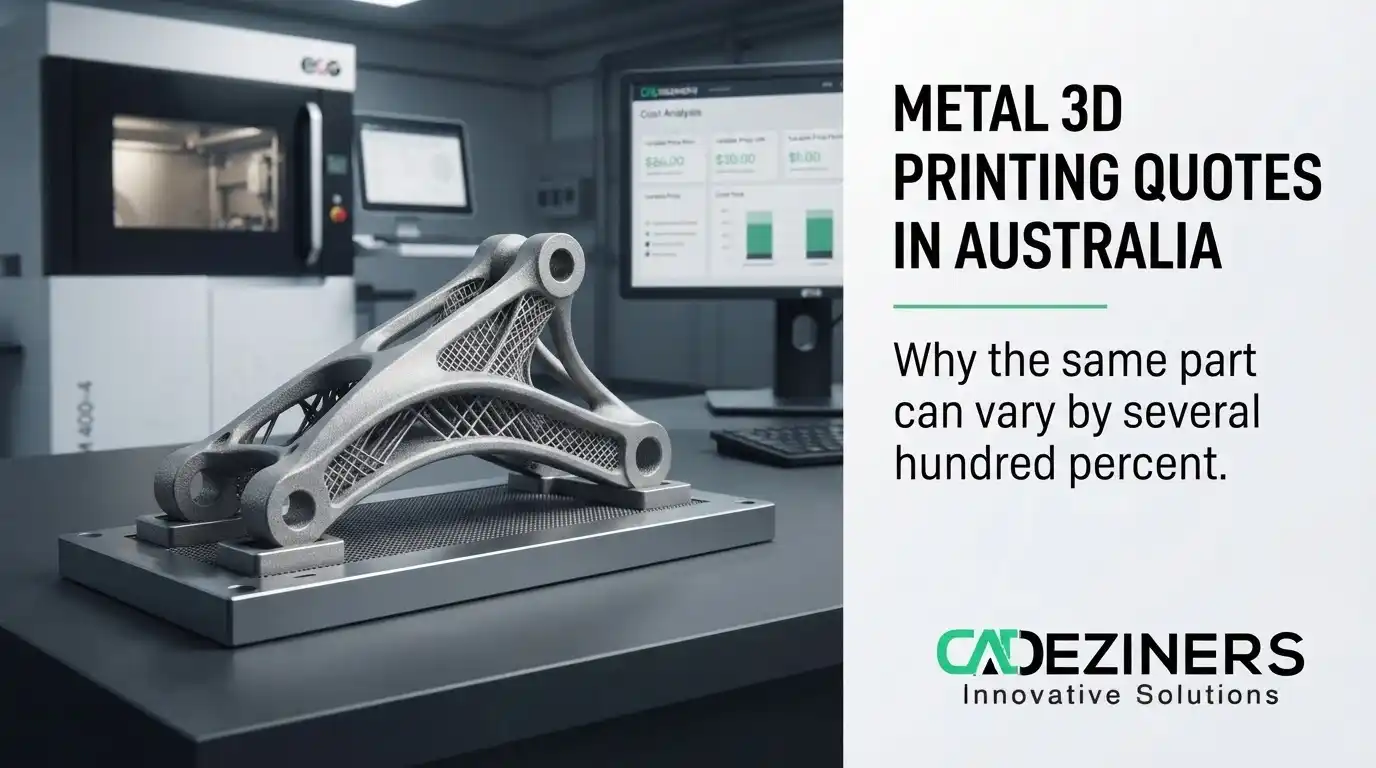
Metal 3D Printing…
Introduction Three suppliers. One CAD file. Three completely different numbers.…
Hear What Our Customers
Have to Say
These short quotes help potential clients understand the value and quality of your work from the perspective of those who have already worked with you.
Very professional to deal with and excellent communication. The finished 3D prints were also of the highest quality and at a reasonable price. Very happy to have found a reliable printer for my projects.
Ordered SLA ABS parts for my Honours Project. They provided on time, with great communication, in excellent condition and all with precision to detail! Definitely going back to them for more!
One off 3d Aluminium print. Great job and turn out well.
Upon getting in touch with them, it was the in-depth knowledge that fast tracked my 3D printing to another level. The attention to detail to find ways in making the parts structurally strong. Fast and speedy delivery. Delighted with the printed parts. Thank you to all the team.
They were absolutely awesome 👍🏼 They did FEA analysis for my project and provided me full report and did the optimisation too. Thanks
They allowed me to make my first efforts at protoyping by converting my Fusion 360 designs into useable parts. I was blown away by the care and effort put in by this company. Thank you!
FAQ
Most standard orders take around 5–10 days for production, with transit time to Perth or regional WA added separately.
Small parts made from commonly used plastics generally sit at the shorter end of that range.
Large builds, metal components, bigger batches and parts requiring chrome plating can take longer because they involve additional production or finishing work.
If you need parts for a mine-site shutdown, equipment repair or product launch, include your required date when requesting a quote.
We can assess the job and confirm the expected production schedule before you place your order.
Yes. We provide 3D printing services for customers across Perth and regional Western Australia.
Whether your parts are going to a workshop in the Perth metro area or a business in the South West, Goldfields or Pilbara, include the delivery address in your quote request.
Regional and remote deliveries may have different freight costs and transit times, particularly when a shipment needs to reach a mine site or a location with specific receiving arrangements.
We can assess the delivery requirements alongside your production schedule so you can plan for the parts to arrive when needed.
ASA is a strong starting point for outdoor 3D printed parts because it offers good resistance to UV exposure and weathering.
It can suit brackets, housings, covers and other components exposed to Perth's sun.
ABS may be suitable for indoor applications, but ASA is generally the better choice when long-term outdoor exposure is a concern.
For parts exposed to higher temperatures, chemicals or salt-laden coastal air, the material needs to be selected according to the actual operating conditions.
Polycarbonate, nylon or PEEK may be worth assessing for specific requirements, but none is automatically suitable for every environment.
Tell us where the part will be used and what it needs to withstand before choosing a material.
Yes, provided the part fits the available machine capacity or can be manufactured in sections.
Large-scale 3D printing in Perth can be useful for equipment housings, industrial covers, display models, prototypes and custom components that would be difficult to produce as one piece using smaller printers.
FDM can be a practical option for larger plastic components, while SLS and MJF are useful for producing complex nylon parts within their respective build limits.
If a design exceeds the available build volume, it may be possible to split it into sections and join them after printing.
Send your CAD file with the overall dimensions so we can assess the build method, joining requirements and likely cost.
Resin 3D printing, commonly using SLA technology, is suited to parts that need fine detail, smooth surfaces or a specific visual finish.
It is often used for presentation models, detailed prototypes and small components with intricate features.
Nylon 3D printing through SLS or MJF is generally better suited to functional parts that need toughness and resistance to repeated handling, depending on the grade and design.
For example, a product team might use an SLA print to assess the appearance of a new product, then use an SLS or MJF nylon part to test how the design performs in use.
The right choice depends on whether appearance, detail, strength, flexibility or production quantity matters most.
Yes. Our wider CAD Deziners capabilities include 2D and 3D drafting, alongside finite element analysis (FEA).
If you have a sketch, an existing drawing or measurements from a worn component, our team can assess what is needed to create a usable CAD model.
FEA can also help evaluate how a design may respond to specified loads and boundary conditions before you commit to manufacturing.
This can be useful for product development and rapid prototyping in Perth, particularly when a part needs design changes before production.
The scope of drafting or analysis depends on the information available and the complexity of the project, so include your requirements when requesting a quote.
The cost of 3D printing in Perth depends on the part's dimensions, material, printing technology, order quantity and finishing requirements, plus freight to your WA delivery address. A small PLA or PETG prototype will generally cost less to produce than a large component made from a high-performance polymer or metal.
Complex geometry, large builds and additional finishing can also increase the total. Upload your CAD file through our online quote builder, select the available material and quantity, and review the quoted price before ordering.
If you are comparing several options, changing the material or quantity can help you understand how your choices affect the overall cost.
Yes. 3D printing can be a practical option for replacement parts when an original component is difficult to source, discontinued or needed in a small quantity.
Examples include clips, covers, knobs, brackets and equipment guards, provided the design and material are suitable for the application.
If you have the original CAD file or a technical drawing, send it with your quote request.
If you only have the physical part, our CAD drafting team can assess whether it can be measured and recreated as a digital model.
The replacement material must be chosen for the loads, temperature, UV exposure and other conditions the component will face.
Safety-critical or load-bearing parts require appropriate engineering assessment before use, and you must have the necessary rights to reproduce protected designs.

Yes. Alongside 3D printing, our broader manufacturing services include CNC machining, injection moulding, vacuum casting and chrome plating.
Each process suits different requirements. CNC machining can be appropriate for components that need specific metal grades or accurately machined features.
Injection moulding may be worth comparing when you need larger quantities of identical plastic parts, while vacuum casting can suit certain small production runs.

Chrome plating can provide a metallic appearance or, where the process and substrate are suitable, improve surface hardness and wear resistance. If you are unsure which method makes the most sense, include your part design, material requirements and expected quantity in your quote request so the available options can be assessed.
A CAD file is the best starting point for a 3D printing quote.
We accept STEP (.step/.stp), STL, 3MF, OBJ, IGES (.iges/.igs), WRL, ZIP and IMG files, as well as PDF files containing models and textures, up to 70 MB.
STEP is useful for designs that need accurate CAD geometry, while STL and 3MF are commonly used to submit 3D models for printing. If particular dimensions, threads or mating features are critical, include a technical drawing with the relevant measurements and tolerances.
No finished CAD model yet? Send your available sketch or drawing details and our CAD drafting team can assess the work required to prepare the design for manufacturing.