
How Strong Are 3D Printed Props for Professional Use?
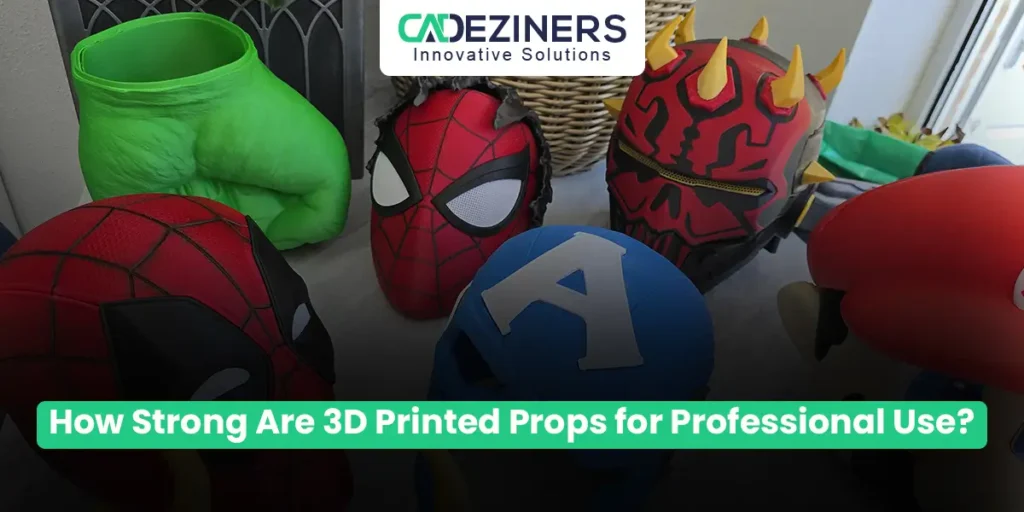
3D printing has changed how props are designed and produced across industries such as film, theatre, cosplay, and industrial prototyping. What once required weeks of manual craftsmanship can now be completed with precision in a fraction of the time. Still, one important question remains at the centre of this innovation: how durable are 3D-printed props in professional settings?
If you rely on props for demanding environments, strength and durability are not optional. You need consistency, reliability, and performance. Let’s explore what determines 3D prop strength, how different materials behave, and how these props perform in real-world professional use.
Understanding the Basics of 3D Printed Props
3D-printed props are objects created layer by layer from digital models. These props can range from simple visual pieces to functional items used in production environments. Unlike traditional props, they offer greater design flexibility and faster iteration.
However, strength depends on more than the printing process alone. It is influenced by material choice, print settings, design structure, and post-processing techniques. Professionals need to consider all these elements to achieve reliable results.
What Determines the Strength of 3D Printed Props?
The durability of 3D props is not fixed. It varies depending on several technical and design factors. Understanding these can help you make better decisions when producing props for professional use.
Material Selection Matters
Different materials offer different levels of strength. Common materials include PLA, ABS, PETG, nylon, and resin. PLA is easy to print but tends to be brittle. ABS offers better impact resistance. PETG provides a balance between flexibility and durability. Nylon stands out for its high strength and wear resistance. Resin prints can achieve fine detail but may lack impact strength unless engineered for toughness. Advanced materials such as carbon fibre-infused filaments or industrial-grade resins can significantly improve performance in demanding applications.
Layer Adhesion and Print Orientation
3D printing builds objects layer by layer. The bonding between these layers plays a major role in strength. Poor adhesion can lead to weak points. Orientation also matters. A prop printed in one direction may be strong under certain forces but weaker under others. Professionals often test different orientations to find the best structural integrity.
Infill Density and Internal Structure
Infill refers to the internal pattern of a printed object. Higher infill density increases strength but also adds weight and cost. For professional props, a balanced approach is often used. Strategic reinforcement in stress areas can improve durability without making the object unnecessarily heavy.
Wall Thickness and Shell Design
Thicker walls improve strength. Increasing the number of outer layers helps distribute stress more evenly. Designers often adjust shell thickness based on the prop’s intended use. A display piece requires less reinforcement than a prop used in repeated handling or action scenes.
Post-Processing Techniques
Post-processing can significantly enhance durability. Techniques such as sanding, coating, or chemical smoothing improve both appearance and strength. Applying protective coatings or using fibre reinforcement methods can increase resistance to wear and impact. In some cases, metal inserts or internal supports are added to boost structural performance.
Printer Quality and Calibration
Not all 3D printers deliver the same results. High-end industrial printers produce more consistent, stronger parts due to greater precision and material handling. Proper calibration ensures that each layer is deposited accurately. Even small errors can reduce the overall strength of the final product.
How Strong Are 3D Printed Props in Real Applications?
Professionals across industries already rely on 3D printed props. Their performance depends on how well they are designed and manufactured. In film production, props often need to look realistic while being lightweight. Many studios use reinforced prints that can withstand repeated use during filming. Some props are designed for controlled breakage when required for specific scenes.
In theatre, props must endure frequent handling and transport. Strong materials like ABS or PETG are commonly used to ensure durability. In cosplay, creators often seek a balance between weight and strength. Lightweight prints with reinforced sections allow for comfortable wear without compromising structural integrity.
Industrial applications demand higher performance. Functional prototypes and tools made with high-strength materials can handle significant stress. This shows that 3D printing can produce professional props that meet rigorous standards.
For businesses aiming to achieve this level of quality, working with experts can streamline the process. CAD Deziners supports complex design and prop production with durable 3D printing in Melbourne, helping ensure that props meet both visual and structural expectations.
Design Strategies for Stronger 3D Props
Professionals use targeted design techniques to improve durability, such as reinforcing stress points and adding internal supports to reduce the risk of cracks. Curved edges are preferred as they help distribute stress more evenly and improve overall structural stability. These considerations are carefully planned during the design stage to ensure the prop remains both strong and visually accurate.
Large props are often divided into smaller sections to improve print accuracy and minimise defects during production. These parts are then assembled using reliable bonding methods to maintain strength and stability. Prototype testing is also an important step, as it helps identify weaknesses and refine the design, ensuring the final prop performs consistently in professional use.
The Role of Advanced Materials in Strength
Material innovation continues to push the limits of 3D printing. High-performance filaments and resins now offer strength comparable to traditional manufacturing materials.
Carbon fibre composites provide excellent stiffness and durability. Engineering-grade resins are designed for impact resistance and long-term use. Metal-filled filaments add weight and strength, making props feel more realistic. These materials open new possibilities for creating durable and reliable props suitable for demanding professional environments.
Conclusion
3D printed props have evolved into reliable tools for professional use. Their strength depends on careful material selection, thoughtful design, and precise manufacturing. When these elements are combined effectively, the results can meet demanding industry standards.
While they may not replace every traditional method, they offer a strong and flexible alternative that continues to improve. With the right approach, 3D printed props can deliver both performance and efficiency in professional environments.
Ready to bring your prop designs to life? CAD Deziners offers reliable 3D printing services in Adelaide, helping you turn your ideas into affordable, durable, and high-quality props with precision and ease.
Recent Posts
-
 Traditional Props vs 3D Printed Props: Cost, Time, and Quality Comparison07 May 2026
 -
How Strong Are 3D Printed Props for Professional Use?07 May 2026
-
 Choosing the Right Material for Durable Stage Props07 May 2026
 -
 Best 3D Printing Technologies for Creating Props (FDM vs SLA vs SLS)07 May 2026
 -
 How 3D Printing Is Transforming Custom Medical Devices19 Mar 2026