
The Benefits of Carbon Fiber in Manufacturing in Australia
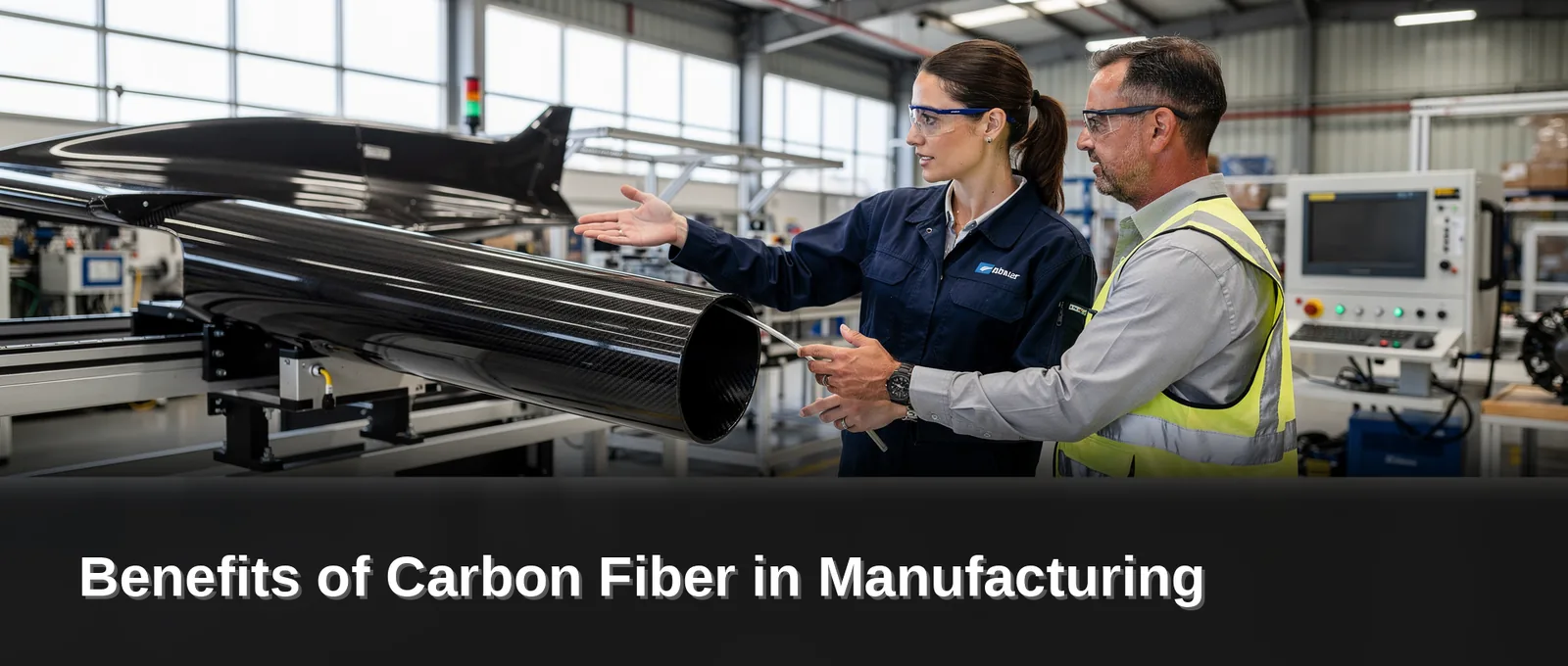
Carbon fiber manufacturing in Australia offers engineers and product teams access to a globally unique research facility at Deakin University’s Carbon Nexus, which operates two industrial-scale processing lines for validating new technologies. Benefits of carbon fiber in manufacturing reduce reliance on overseas suppliers, enabling faster prototyping and production of high-strength, lightweight composite parts.
Why carbon fiber manufacturing matters in Australia?
Carbon fiber is a new generation engineered material positioned for lighter and stronger structural components. Australian manufacturers now use carbon fiber composites across high-performance sectors where weight reduction and stiffness drive competitive advantage. Missing this shift means losing ground in aerospace, automotive, and industrial supply chains.
The benefits of carbon fiber in manufacturing extend beyond raw material properties. Carbon fiber delivers exceptional tensile strength, fatigue resistance, and dimensional stability. For engineers and product teams, these characteristics translate into parts that survive demanding operating conditions without adding unnecessary mass.
What is driving carbon fiber adoption in Australia?
State and Federal investment in carbon fiber R&D through universities and capability development grants has actively built the Australian carbon fiber manufacturing economy. Composites Australia mapped enterprises with carbon fiber interests across six states and the ACT. That mapping includes companies that make things, companies that supply raw materials, and agencies providing engineering and industrial design support.
Carbon fiber composites industrial applications
now span marine, aerospace, automotive, and defense. The strength to weight ratio carbon fiber offers outperforms aluminum in stiffness-critical designs. Engineers evaluating carbon fiber vs aluminum should weigh specific modulus, fatigue life, and corrosion resistance rather than raw tensile strength alone.
How does additive manufacturing fit into carbon fiber production?
Additive manufacturing Australia
capabilities connect directly to carbon fiber workflows. 3D Printings provides custom 3D printing services for engineers, product teams, and manufacturers, from rapid prototyping to low-volume manufacturing across FDM, SLA, SLS, PolyJet, and metal. Carbon fiber 3D printing Australia services support functional prototypes and production-ready components without overseas lead times.
Australian teams pursuing sustainable manufacturing methods gain additional advantages. Local production reduces freight costs and supply chain exposure. The national research base, combined with accessible printing services, positions Australian manufacturers to capture high-value composite work that previously went offshore.
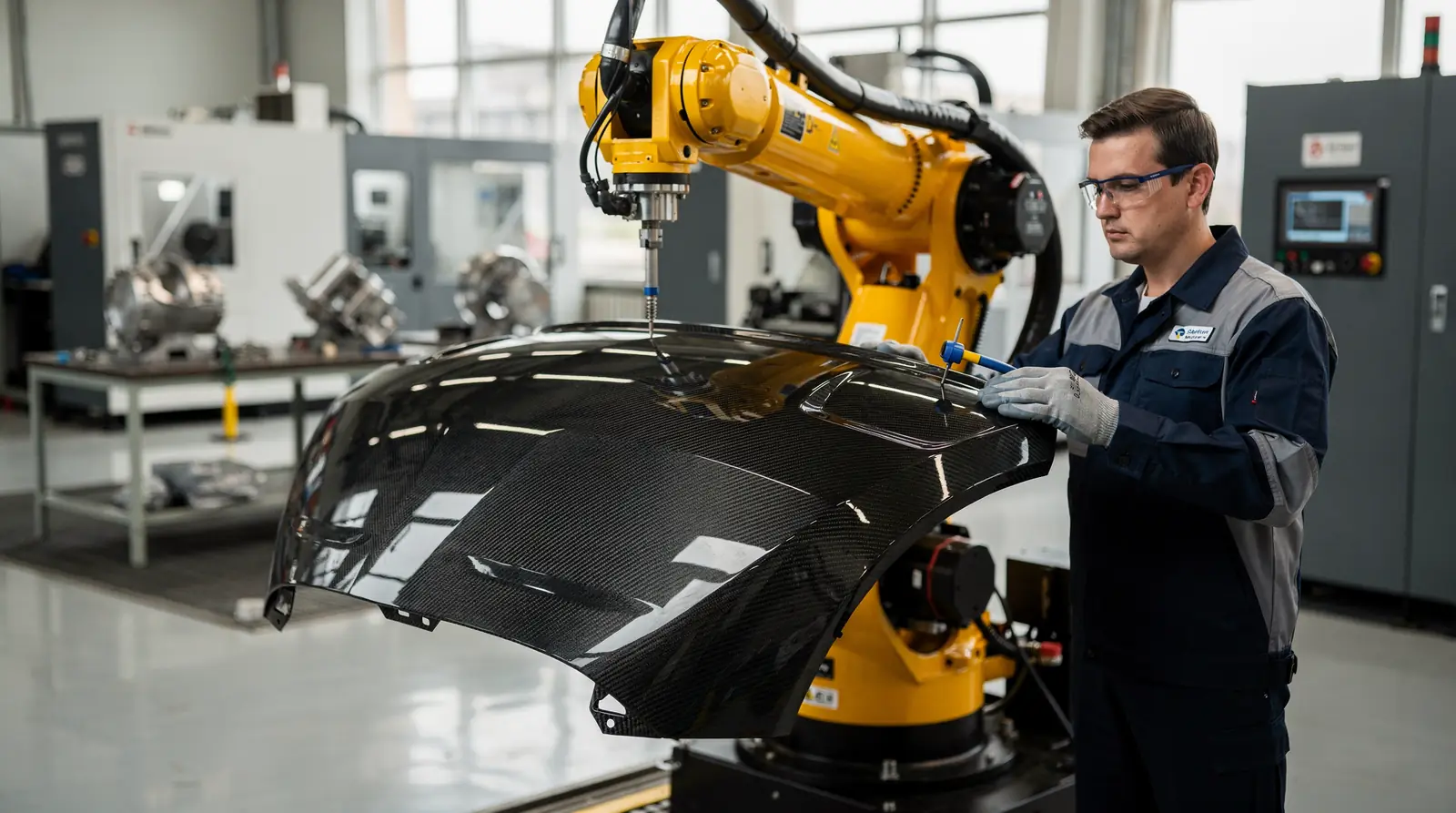
What are the benefits of carbon fiber in manufacturing?
Carbon fiber delivers an extremely high strength to weight ratio carbon fiber that transforms how engineers approach structural design. The material achieves exceptional stiffness while weighing a fraction of traditional metals. This combination makes it the preferred reinforcement where weight savings and structural reliability are critical.
Why do manufacturers choose carbon fiber over traditional materials?
The benefits of carbon fiber in manufacturing extend beyond simple weight reduction. Carbon fiber provides outstanding tensile properties and superior fatigue resistance. Components maintain dimensional stability under repeated loading cycles. These characteristics prove essential for high-performance laminates in demanding environments.
Carbon fiber vs aluminum comparisons reveal stark performance differences. Carbon fiber delivers far greater stiffness than aluminum at a significantly lower weight. Aluminum fatigues predictably over time. Carbon fiber resists fatigue degradation far longer. For precision-engineered components, this durability translates directly into extended service life and reduced maintenance intervals.
How does carbon fiber perform in industrial applications?
Carbon fiber composites industrial applications
span performance yachts, racing structures, high-load modules, and aerospace tooling. The material excels where rigidity and lightweight construction intersect. Engineers specify carbon fiber for components that must endure cyclic stresses without dimensional drift.
3D Printings manufactures precise and durable carbon fiber products using advanced technology and high-quality materials. The company’s skilled technicians produce even the most complex designs efficiently. For teams exploring carbon fiber 3D printing Australia options, the company offers a vast range of 3D carbon fiber products across the country.
Additive manufacturing Australia
Capabilities now include carbon fiber reinforced thermoplastics. These materials bridge the gap between rapid prototyping and production-ready structural parts. Engineers gain access to lightweight, rigid components without tooling investment. The result is faster iteration cycles and lower per-part costs for low-volume manufacturing runs.
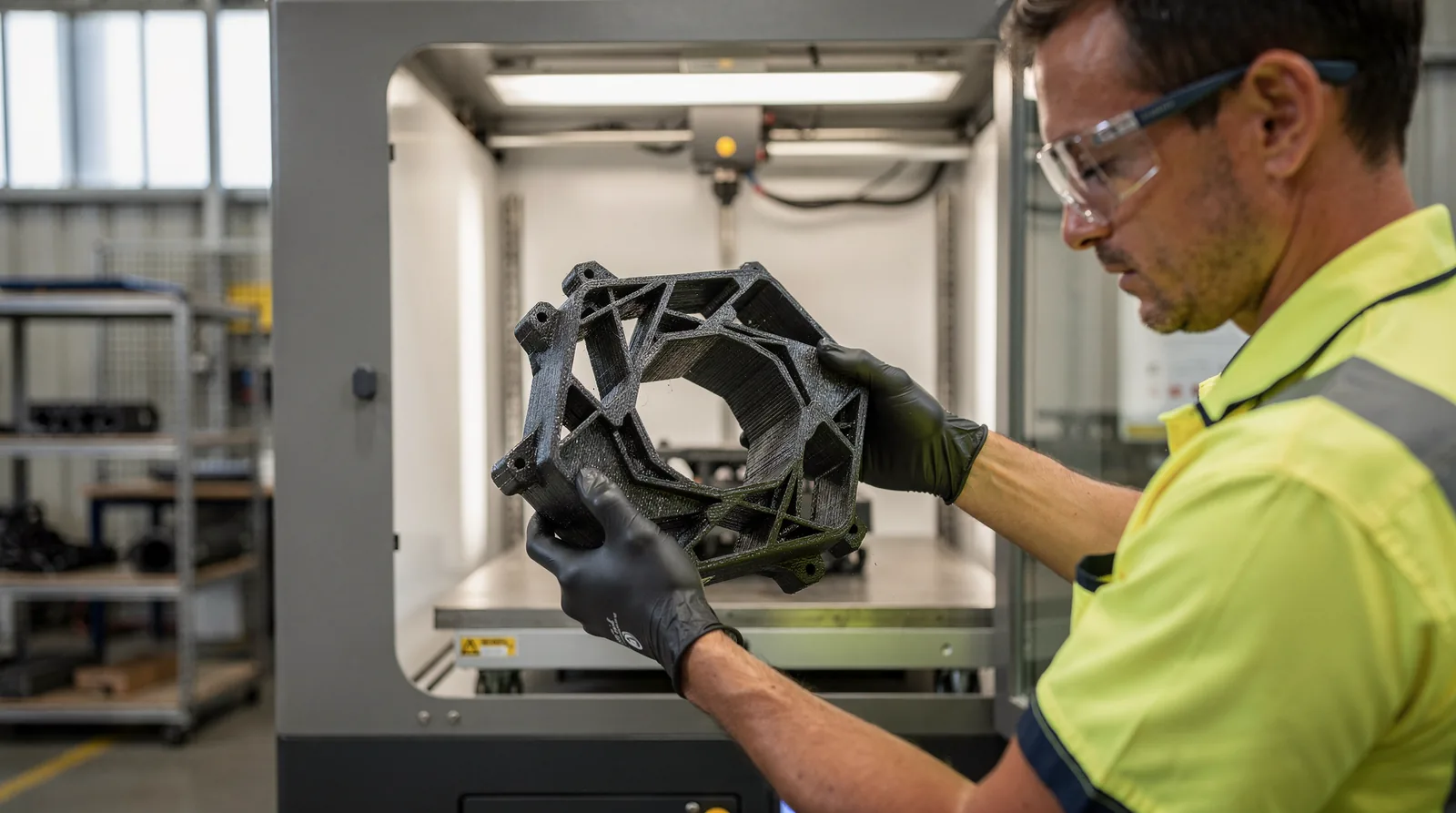
How does carbon fiber 3D printing Australia work?
Carbon fiber 3D printing in Australia produces high-strength, lightweight functional parts through additive manufacturing. Carbon fiber 3D printing Australia services combine continuous or chopped carbon fiber filaments with advanced polymer matrices. The process deposits material layer by layer, fusing each cross-section into a solid component. Engineers gain parts with exceptional stiffness without the weight penalty of traditional metals.
Additive manufacturing Australia
workflows at 3D Printings support rapid prototyping and low-volume production. The company’s skilled technicians ensure even the most complex designs are produced efficiently and with accuracy. Fast turnaround times remain a core operational priority. Orders move from digital file to finished part without the delays of overseas tooling.
What materials are used in carbon fiber 3D printing?
The process typically uses carbon fiber reinforced nylons, polycarbonates, or PEEK-based filaments. These materials embed chopped or continuous carbon strands within a thermoplastic matrix. The result is a printable composite that retains the base polymer’s processability while gaining significant mechanical reinforcement.
How does the strength to weight ratio compare to metals?
Strength to weight ratio carbon fiber outperforms aluminum in many load-bearing applications. Carbon fiber composites deliver outstanding tensile properties and fatigue resistance. ATL Composites notes these characteristics make the material ideal for high-load modules and precision-engineered components. Carbon fiber vs aluminum comparisons consistently favor carbon fiber where mass reduction and structural reliability are critical.
Carbon fiber composites industrial applications span performance yachts, racing structures, and demanding mechanical assemblies. The material’s dimensional stability ensures parts maintain tight tolerances under stress. Benefits of carbon fiber in manufacturing include reduced component mass, longer service life under cyclic loading, and elimination of corrosion concerns inherent to metallic alternatives.
3D Printings delivers these advantages through Australian-based production. The company’s additive manufacturing services eliminate minimum order quantities that constrain traditional composite fabrication. Engineers receive functional prototypes and production-ready parts with the same material properties expected from conventional carbon fiber components.
What are carbon fiber composites industrial applications?
Carbon fiber composites serve critical roles across Australian manufacturing sectors where structural performance cannot be compromised. The material’s exceptional strength to weight ratio carbon fiber delivers makes it indispensable for aerospace, marine, automotive, industrial, and defense applications. Engineers who overlook composite alternatives risk component failure, excess weight penalties, and escalating production costs that erode competitive advantage.
Which Australian industries rely most on carbon fiber composites?
Marine manufacturing leads adoption, with carbon fiber forming the backbone of performance yachts and racing structures. ATL Composites supplies reinforcements in unidirectional, plain weave, twill, satin, and double bias formats ranging from 3K to 12K. These formats enable precise mechanical tailoring for hulls, masts, and high-load deck modules.
Aerospace and defense sectors demand the material’s dimensional stability and fatigue resistance. Lightweight airframe components, UAV structures, and precision-engineered military hardware all benefit from carbon fiber’s stiffness. Automotive manufacturers apply it to chassis components, body panels, and drivetrain elements where every kilogram saved translates to measurable performance gains.
Industrial applications span high-speed machinery, robotic arms, and pressure vessels. The carbon fiber composites industrial applications extend into architecture for structural reinforcement and bio-healthcare for prosthetics and medical devices.
How does carbon fiber compare to traditional materials like aluminum?
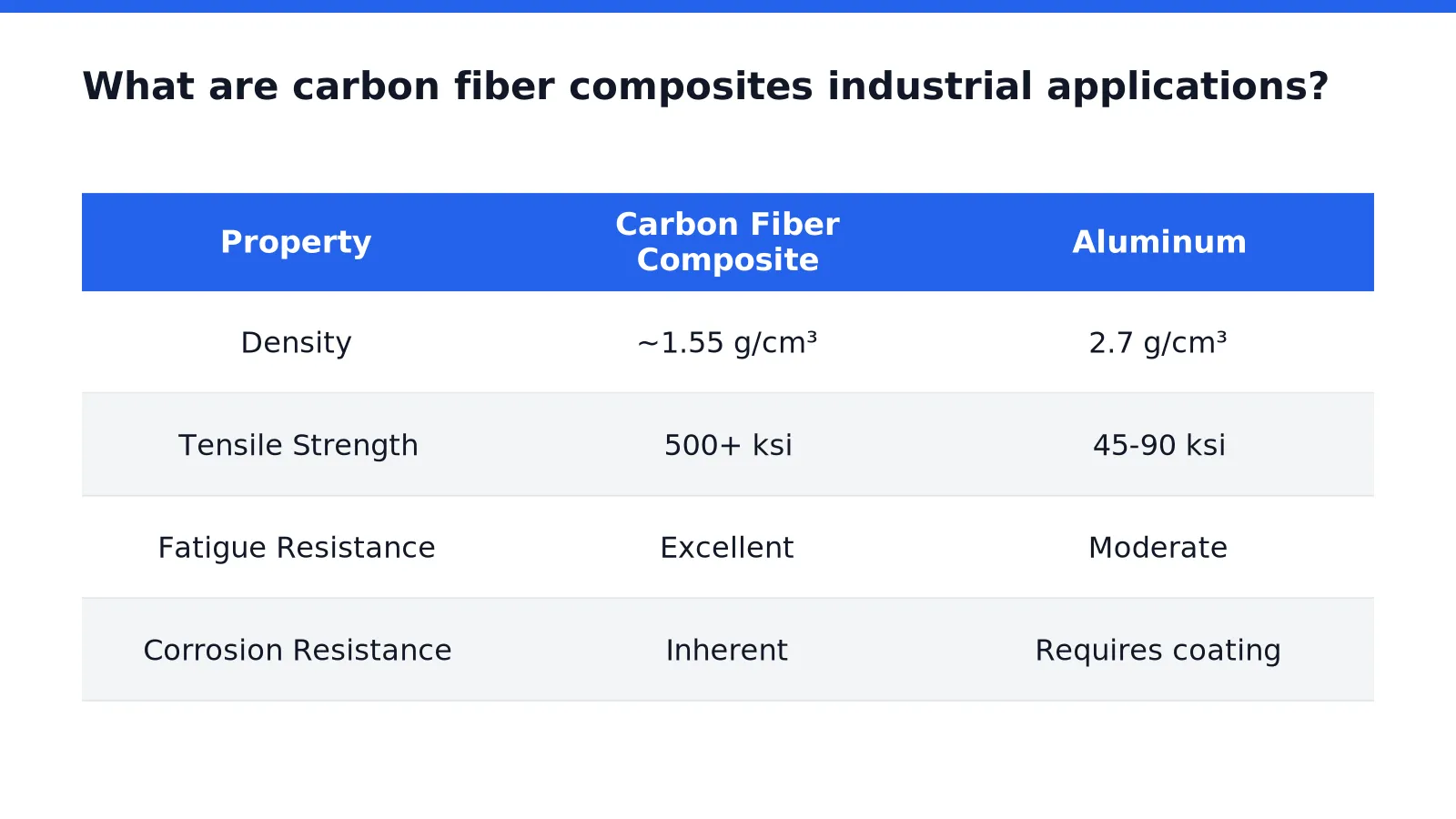
The carbon fiber vs aluminum comparison reveals stark differences in engineering outcomes. Carbon fiber achieves far higher tensile strength while weighing significantly less than aluminum. This disparity means designers eliminate unnecessary mass without sacrificing load-bearing capacity.
Property | Carbon Fiber Composite | Aluminum |
|---|---|---|
Density | ~1.55 g/cm³ | 2.7 g/cm³ |
Tensile Strength | 500+ ksi | 45-90 ksi |
Fatigue Resistance | Excellent | Moderate |
Corrosion Resistance | Inherent | Requires coating |
Aluminum fatigues predictably under cyclic loading. Carbon fiber resists this degradation, maintaining structural integrity across millions of load cycles. For Australian manufacturers, the benefits of carbon fiber in manufacturing include longer service intervals and reduced maintenance downtime.
What role does additive manufacturing play in carbon fiber production?
Additive manufacturing Australia capabilities now integrate carbon fiber reinforcement into 3D printed components. Carbon fiber 3D printing Australia services produce functional prototypes and low-volume production parts with continuous fiber reinforcement. 3D Printings serves automotive, aerospace, and industrial clients with custom solutions that reduce dependence on overseas suppliers. The company’s approach combines rapid prototyping with cost-effective manufacturing options tailored to specific engineering requirements. Engineers gain faster iteration cycles and production-ready components without offshore lead times.
How does carbon fiber vs aluminum compare?
Carbon fiber delivers a strength to weight ratio carbon fiber that aluminum cannot match. Engineers who overlook this difference risk adding unnecessary mass to load-bearing assemblies. The performance gap widens under cyclic loading, where fatigue life becomes the deciding factor.
ATL Composites identifies an extremely high strength-to-weight ratio as a defining characteristic of carbon fiber reinforcements. Aluminum offers roughly one-third the stiffness at equivalent weight. For Australian manufacturers producing drone airframes, robotic end-effectors, or motorsport brackets, that disparity translates directly into slower actuation and higher energy draw. A component that weighs 1.2 kilograms in aluminum often drops below 700 grams when redesigned for carbon fiber composite construction.
What makes carbon fiber stiffer than aluminum in structural applications?
Stiffness governs deflection under load. Carbon fiber laminates achieve exceptional stiffness through oriented continuous filaments, a property ATL Composites highlights in its reinforcement specifications. Aluminum behaves isotropically, meaning its stiffness remains uniform in all directions. Carbon fiber allows engineers to concentrate stiffness precisely along load paths. The result is a part that resists bending with less material, a critical advantage for cantilevered arms and thin-wall housings.
How does fatigue resistance differ between the two materials?
Aluminum fatigues predictably. Every stress cycle consumes a fraction of its service life until cracks initiate. Carbon fiber composites exhibit superior fatigue resistance, maintaining mechanical properties through millions of cycles that would degrade aluminum. For Australian plant operations managers running continuous production lines, this durability eliminates unplanned downtime caused by metal fatigue failures.
Property | Carbon Fiber Composite | Aluminum |
|---|---|---|
Strength-to-weight ratio | Extremely high | Moderate |
Stiffness | Directionally tailorable | Isotropic, lower specific stiffness |
Fatigue resistance | Superior, minimal degradation | Progressive, cycle-limited |
Corrosion susceptibility | Inert to most chemicals | Galvanic corrosion risk |
Carbon fiber composites industrial applications across Australia now span aerospace tooling, automotive subframes, and bio-healthcare devices. The material’s dimensional stability under thermal loads further separates it from aluminum, which expands and contracts enough to compromise precision fits.
3D Printings supports this shift through additive manufacturing Australia services that produce functional carbon fiber reinforced parts. The company’s engineering team delivers complex projects on time, using advanced design and analysis software to validate laminate schedules before production begins. For teams evaluating carbon fiber 3D printing Australia options, the combination of material performance and manufacturing precision shortens the path from digital model to production-ready component.
Conclusion
For Australian engineers and manufacturers evaluating material choices, the decision narrows to a single question does the application demand the weight savings, fatigue resistance, and directional stiffness that only carbon fiber delivers?
Where the answer is yes, the path forward requires partnering with a service provider that understands composite design and additive manufacturing integration. Selecting the right production partner determines whether those material advantages translate into reliable, cost-effective components delivered on schedule.

Ashish Magoo is an Engineering Manager at CAD Deziners with over 10 years of experience in product design, prototyping and manufacturing. He guides engineering teams and shares practical insights on CAD design, product development, 3D printing, reverse engineering and manufacturing processes.
Areas of expertise
- Product Design
- CAD Engineering
- Prototyping
- 3D Printing
- 3D Scanning
- Manufacturing