Imagine creating almost anything you can think of right from your computer—a custom shoe, a replacement part for a gadget, or even a tiny model of a famous building. That’s the magic of additive manufacturing, a technology that’s changing how we make things.
But like any new idea, it has its positives and negatives. Let’s explore why it’s exciting and what makes it tricky. Whether you love technology or just want to know what’s next, you can also refer to our Complete Guide for a comprehensive understanding of the topic.
Pros
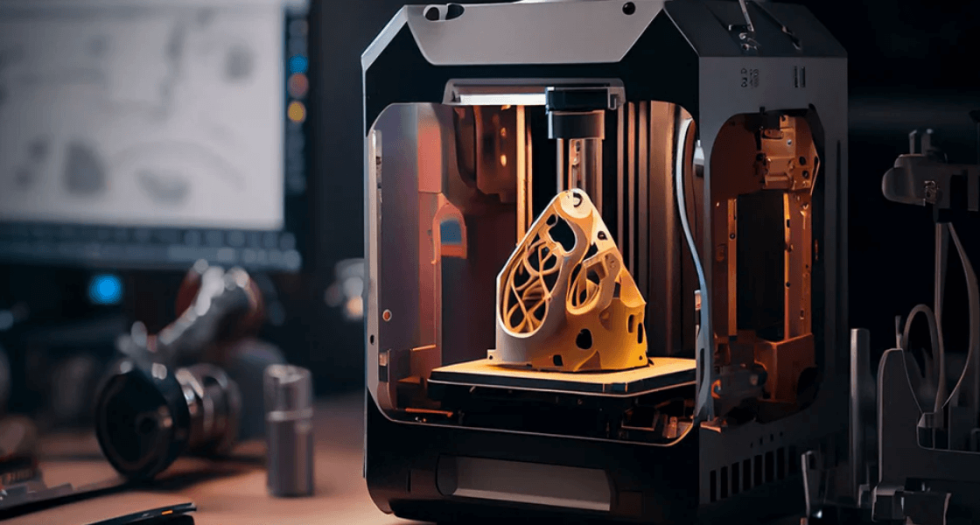
Customization and Personalization
One of the biggest advantages of this technology is its ability to make highly customised products. Whether it’s a personalised prosthetic limb, custom-fit shoes, or unique jewellery designs, it allows for individualised manufacturing on a large scale.
Rapid Prototyping
Traditional manufacturing processes often involve lengthy prototyping lead times. It enables designers and engineers to swiftly produce prototypes and refine designs. This rapid prototyping capability reduces time to market and enables faster innovation cycles.
Complex Geometries
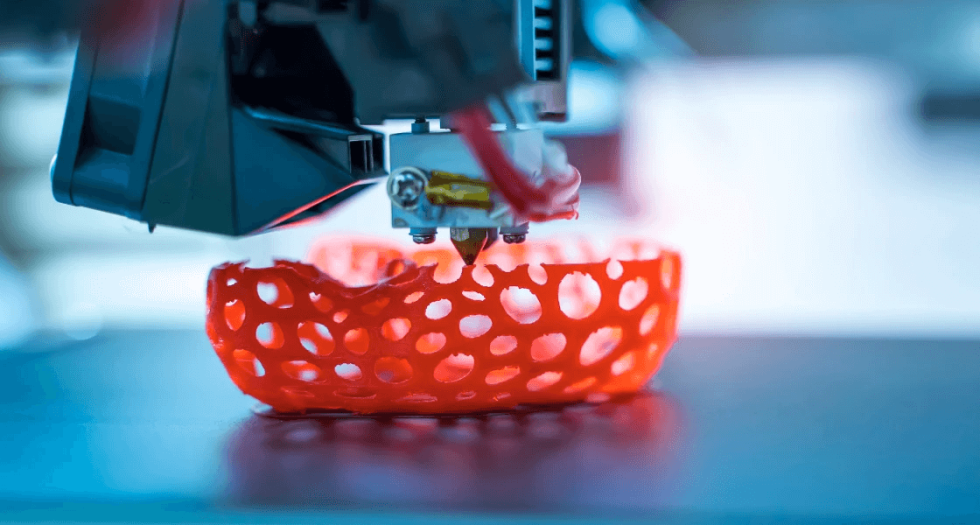
Unlike traditional manufacturing methods that may be limited by moulds and tooling, it can produce complex geometries with intricate details. This is particularly useful in industries like aerospace, where there’s a need for intricate and lightweight parts.
Cost-Effective for Small Batch Production
For small production runs, it can be more cost-effective compared to traditional manufacturing methods. It eliminates the need for expensive moulds and tooling, making it feasible to produce small quantities economically.
Accessibility and Democratization of Manufacturing
It has the potential to democratise manufacturing by reducing barriers to entry. It lets entrepreneurs, designers, and hobbyists bring their ideas to life without requiring extensive manufacturing facilities.
Medical Advancements
In healthcare, it has enabled remarkable advancements. It is used for creating patient-specific implants, prosthetics, surgical models, and even organ tissues. Customised medical devices can improve patient outcomes and quality of life.
Cons
Limited Materials and Strength
While this technology continues to evolve, the range of materials available for printing is still more limited than traditional manufacturing. This is one of the disadvantages of it. Depending on the material used, the strength and durability of printed parts may also be inferior.
Post-Processing Requirements
Parts created through this method often need additional steps, like post-processing, to achieve the desired surface finish or mechanical properties. This can increase both the time and cost of the manufacturing process.
Quality Control Challenges
Ensuring consistent quality in 3D-printed parts can be challenging, especially with larger production volumes. Variations in print parameters, material properties, and environmental factors can affect the final product quality.
Intellectual Property Concerns:
The ease of digital file-sharing in this process raises concerns about intellectual property (IP) protection. Designs can be easily replicated or modified without authorisation, posing challenges for creators and rights holders.
Size Limitations
The maximum object size that can be 3D printed depends on the dimensions of the printer’s build area. Large-scale manufacturing or printing of oversized objects may require specialised equipment or assembly of smaller printed parts.
Technological Dependence
As with any emerging technology, businesses and industries adopting it may become dependent on specific technologies, software, or suppliers. Rapid advancements in technology could also lead to the obsolescence of equipment or methods.
Conclusion
This technology opens doors to a world where personalised creations and quick prototypes are the norm. While it’s revolutionising how things are made, hurdles like material choices and quality control remain.
Yet, as technology marches forward, these challenges are being tackled head-on. Who will not like a future where tailored products are just a print away, shaping industries and sparking innovation like never before? It’s a journey worth watching as it redefines what’s possible in manufacturing and beyond. For those eager to explore the possibilities firsthand, consider checking out our 3D printing services in Melbourne as well as in Adelaide. We can help bring your ideas to life with the latest printing technology.