
Lightweight, Corrosion-Resistant Components: 3D Printing’s Role in Sustainable Ship Design
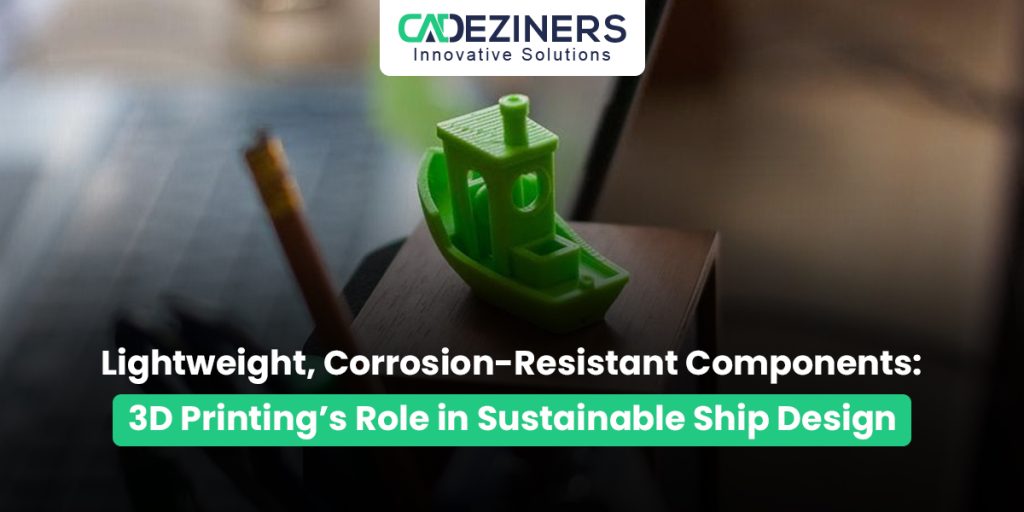
The maritime industry is undergoing a quiet revolution. As the world pushes toward greener and more cost-efficient transport, shipbuilders are turning to advanced technologies that reduce waste, lower emissions, and improve durability. Among these technologies, additive manufacturing is reshaping the way vessels are designed, built, and maintained. The emergence of the 3D printed ship concept marks a significant shift toward sustainability and long-term efficiency.
Rethinking Shipbuilding for a Greener Future
Traditional ship construction relies heavily on steel and other metals that, while strong, are prone to corrosion and require energy-intensive manufacturing. Modern environmental regulations and rising fuel costs have prompted designers to look for lighter materials and smarter production techniques.
Innovative ship design now focuses on three key goals: reducing weight, cutting emissions, and extending lifespan. 3D printing technology addresses all three.
Efficiency through Material Precision
Additive manufacturing produces parts layer by layer, using only the material required for the component. This method reduces excess waste that is common in traditional machining and welding. The result is a leaner, more sustainable production process.
Design Freedom
Unlike traditional fabrication methods, this technique supports intricate geometries and complex internal structures. This freedom allows shipbuilders to create optimised components that balance strength, flexibility, and weight, ideal characteristics for marine environments.
Why Weight Reduction Matters in Maritime Engineering
Ship weight directly impacts fuel efficiency and operational costs. The lighter the vessel, the less energy it consumes to travel across oceans. Reducing weight has an exponential effect on sustainability because it cuts both greenhouse gas emissions and long-term maintenance expenses.
Advanced Materials for Lightweight Construction
Modern 3D printing ships use polymers, composites, and metal alloys that offer high strength without unnecessary bulk. For instance, titanium and aluminium powders used in metal 3D printing are significantly lighter than traditional steel yet deliver comparable resilience.
Corrosion Resistance as a Key Benefit
Marine environments are notoriously harsh. Saltwater corrosion can weaken hull structures and internal components over time, leading to expensive repairs. Additively manufactured parts can integrate corrosion-resistant materials or coatings that extend durability while reducing the need for frequent replacements.
Redefining Component Manufacturing through Additive Design
In shipbuilding, components such as propellers, piping systems, and brackets can now be produced using additive manufacturing instead of conventional casting or forging.
On-Demand Manufacturing
One of the greatest advantages of this printing technology is its flexibility. When a part fails, engineers can simply print a replacement on-site or near the dockyard. This minimises downtime and reduces the logistics footprint of shipping parts worldwide.
Digital Inventory Concept
Instead of maintaining large physical stockpiles, companies are now adopting digital inventories, libraries of printable part designs that can be produced as needed. This shift saves space, lowers costs, and supports rapid response in maintenance and repair operations.
Complex, Integrated Components
It also enables engineers to merge multiple components into a single, seamless part. This reduces the number of joints and welds, improving overall strength and reducing potential leak points in critical systems.
Sustainability through Smarter Resource Use
The ship sustainability innovations driving modern maritime design extend beyond material choice. They encompass the entire lifecycle of a vessel, including manufacturing, maintenance, and eventual recycling.
Waste Reduction in Production
Because additive manufacturing uses precise amounts of material, it drastically reduces industrial waste. Every gram of metal powder or polymer filament contributes directly to the final structure, cutting down on energy and raw material consumption.
Energy Efficiency in Operation
Lighter ships burn less fuel, contributing to significant reductions in carbon dioxide emissions. According to research from the International Maritime Organisation (IMO), even a 10% reduction in vessel weight can lead to measurable savings in operational energy.
Localised Production and Lower Shipping Emissions
Using regional production hubs for ship components further reduces the environmental impact of transportation. Australian firms, such as those offering 3D printing services in Sydney, Melbourne, and other cities, are now playing a pivotal role in making sustainable ship production more accessible and eco-conscious.
The Role of Additive Manufacturing in Repair and Maintenance
Sustainability isn’t just about building new ships; it’s also about extending the life of existing ones. Additive manufacturing provides a practical solution for replacing worn or damaged parts without overhauling entire systems.
Rapid Repairs
Instead of waiting weeks for spare parts to arrive, repair crews can print components within hours. This not only reduces downtime but also saves money on emergency freight and storage costs.
Upgrades and Retrofitting
It can also be used to upgrade existing vessels. Engineers can design and fabricate custom fittings or performance-boosting parts that improve energy efficiency or replace obsolete designs.
Extending Lifespan
Because printed components can be made from corrosion-resistant alloys or coated polymers, they help extend the vessel’s functional lifespan while minimising the need for frequent maintenance.
Innovations in Large-Scale Additive Manufacturing
Recent advances have made it possible to print much larger components, even entire ship sections. Research institutions and shipyards are experimenting with full-scale additive manufacturing for structural elements like hull panels and propellers.
Propeller Printing Projects
The Dutch company RAMLAB made headlines for creating the world’s first 3D-printed ship propeller. This innovation showcased how additive manufacturing can meet marine-grade performance standards while reducing lead times dramatically.
Modular Shipbuilding
Instead of constructing ships in a linear fashion, modular production allows multiple parts to be printed simultaneously and then assembled. This not only speeds up the build process but also introduces more flexibility in design.
A Look Toward the Future
The integration of additive manufacturing into ship design represents a major leap toward sustainable manufacturing. The combination of lightweight, corrosion-resistant materials and efficient production methods is transforming how ships are conceived, built, and maintained.
For Australia, the growth of the maritime additive manufacturing sector offers new opportunities for local innovation and economic development. Partnering with experts in the field can help shipbuilders, engineers, and designers stay ahead of global sustainability trends.
We offer advanced additive manufacturing solutions to bring these innovations to life. Our expert teams provide precision, quality, and reliability across multiple industries, including marine engineering. Contact us today for 3D printing service in Melbourne, Sydney, and all over Australia for your next sustainable design project!
Recent Posts
-
 How 3D Printing Is Transforming Custom Medical Devices19 Mar 2026
 -
 The Advantages of Lightweight 3D Printed Components in Aerospace18 Mar 2026
 -
 What Makes Carbon Fibre Filament So Strong? A Look Inside the Material17 Mar 2026
 -
 Why 3D Printed Exhibition Models Are Essential for Trade Show Success16 Mar 2026
 -
 How the Entertainment Industry Uses 3D Printing for Faster Props, Costumes & Sets26 Feb 2026