
How the Entertainment Industry Uses 3D Printing for Faster Props, Costumes & Sets
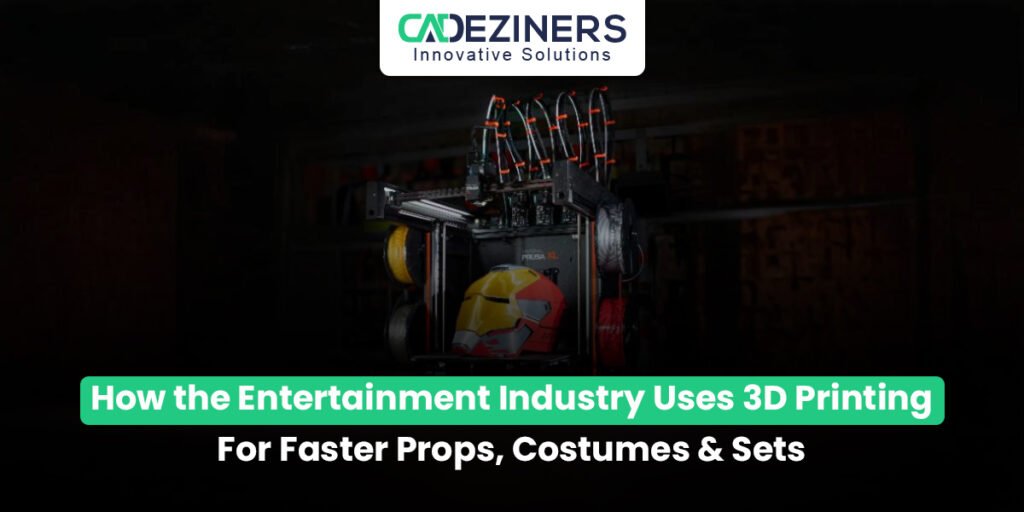
The entertainment industry has always been a playground for creativity, and nowadays, one of the most thrilling tools it uses is additive manufacturing. If it’s for movie sets or theatre productions, this innovative technology is making everything more exciting and accessible.
In this blog, we’ll explore how this technology is being used, why it’s gained rapid adoption, and the many advantages it offers filmmakers, designers, and creators across the entertainment industry.
Why It Matters in the Entertainment World
In traditional prop and costume making, creating complex items often involves hours of hand-crafting, moulding, and sculpting. It changes the game by turning digital designs into physical objects quickly and with remarkable precision. Designers can go from a concept on a computer screen to a tangible item much faster than traditional methods. However, most printed props still require post-processing, such as sanding, painting, or assembly, before they are camera-ready.
It’s not only about how fast it is. Modern 3D printers can create very detailed and realistic props that look authentic on camera, from complex gadgets to fantasy items.
How Additive Manufacturing is Used for Props
Here’s how it is used for props:
Rapid Prototyping and Production
A key benefit of 3D printing in entertainment is its ability to allow the rapid production of prototypes. If it’s a weapon, futuristic device, or a detailed piece of set dressing, printers can produce full-scale models in hours or days, something that traditionally might take weeks.
Many productions use this technique to prototype or produce components of iconic props such as lightsaber hilts, helmets, and armour. These printed parts are typically combined with other fabrication techniques, then finished with sanding, painting, and assembly.
3D Printing in Costume Design
Both props and costume design have experienced changes due to this technology. Read more about it below:
Custom Fit and Comfort
Costumes in film and stage performances must look good, be comfortable, and functional. Additive manufacturing is often used for specific costume elements, like armour pieces, masks, or decorative accessories, which can be made to an actor’s measurements for a better fit. Entire costumes are usually a combination of printed parts and traditional fabrics.
Complex designs, such as elaborate crowns or shoulder pieces that would be difficult to sculpt by hand, are now easily achievable thanks to additive manufacturing methods like SLS or SLA printing.
This technology also makes 3D printed armour feasible for characters in fantasy and sci-fi genres, lightweight yet visually striking pieces that actors can wear during long shoots without discomfort.
Set Design and Miniature Models
Read about how the set design and miniature models’ space have changed because of this technology:
Detailed Set Components and Miniatures
Additive manufacturing isn’t just for props and costumes; it’s also used in creating detailed set components. Designers can produce miniature architectural models or complex design elements for larger set pieces. This offers directors and art teams a tangible preview of final sets before committing to full-scale builds.
Large set elements are rarely printed in full scale; instead, it is most commonly used for miniatures, decorative components, and modular pieces that are then integrated into the set design.
Benefits of Using 3D Printing in Entertainment
Explore these advantages of using 3D printing in entertainment:
Speed and Efficiency
It dramatically shortens the time between concept and finished product. Designers can iterate quickly, testing and refining props or costume elements without the need for complex moulds or extensive handwork.
Precision and Complexity
With high-resolution printers, even the most intricate details are preserved. This precision is especially valuable for film props that will appear close-up on camera or in high-definition formats.
Cost-Effectiveness
It can reduce costs for prototypes and small-batch items, but large-scale production may still be costly due to material, machine time, and post-processing, which can be cost-effective for prototypes, complex designs, and limited-run items where traditional tooling and mould-making would be expensive.
Cosplay and Fan Engagement
The influence of additive manufacturing extends beyond professional production into fan communities. Cosplay 3D printing has exploded in popularity, enabling enthusiasts to produce screen-accurate props, helmets and accessories for conventions and fan projects.
This trend has spread across fan communities, enabling enthusiasts to produce screen-accurate props. In some cases, studios have collaborated with makers or released official 3D model files for fans, though this remains relatively rare, blurring the line between audience and creator.
Practical Examples from Film and TV
Many well-known film franchises have used it for various elements:
- Black Panther (printed costume components like Queen Ramonda’s crown)
- Zero Dark Thirty (printed gear replicas when originals weren’t available)
- Thor props (various versions of Mjölnir)
- Stranger Things uses 3D prints in the design and reference process before digital effects.
- ParaNorman used 3D printing for thousands of interchangeable faces in stop-motion animation.
Choosing the Right Support
For creators and production teams in Australia looking to integrate this technique into their workflow, partnering with a reliable provider can make all the difference. If you need professional support for high-quality models and precise production, consider reaching out to us, the best 3D printing service in Sydney. We offer expert design and manufacturing support to bring your concepts to life.
Challenges and Considerations
While it offers significant advantages, there are challenges such as managing material properties, post-processing finishes, and ensuring durability under real-world use. Production teams must also coordinate digital design with traditional costumes and set elements to ensure seamless integration.
The Future of 3D Printing in Entertainment
As this printing technology continues to improve, its role in entertainment is set to expand. We can expect more detailed designs, quicker manufacturing, and new materials that make things look more real. This will further empower designers and storytellers to push creative boundaries.
By combining cutting-edge technology with artistic vision, the entertainment industry is redefining what’s possible on screen and stage, and it is at the heart of that transformation.
Final Thoughts
3D printing has reshaped the way the entertainment industry approaches props, costumes, and set design. It quickly and accurately transforms digital designs into physical objects, saving costs. It’s essential for filmmakers, designers, and creators. From blockbuster films to theatre productions and vibrant cosplay communities, 3D printing is helping storytellers bring their visions to life in ways once thought impossible.
For professionals and hobbyists alike across Australia, embracing this technology opens up exciting creative possibilities. With us, offering expert 3D printing services in Melbourne, turning concepts into reality has never been more accessible. Reach out to us today to learn more!
Recent Posts
-
 How 3D Printing Is Transforming Custom Medical Devices19 Mar 2026
 -
 The Advantages of Lightweight 3D Printed Components in Aerospace18 Mar 2026
 -
 What Makes Carbon Fibre Filament So Strong? A Look Inside the Material17 Mar 2026
 -
 Why 3D Printed Exhibition Models Are Essential for Trade Show Success16 Mar 2026
 -
How the Entertainment Industry Uses 3D Printing for Faster Props, Costumes & Sets26 Feb 2026