3D printing is revolutionising manufacturing, allowing for the creation of complex and custom parts faster than ever before.
As industries push the boundaries of what’s possible, the demand for advanced materials has skyrocketed, fuelling innovation in composites, high-performance polymers, metals, and ceramics.
With these developments, the potential to fabricate components with superior properties—lightweight, durable, and heat-resistant—is growing exponentially.
But with opportunities come challenges. From optimising material properties to overcoming production limitations, using this technology requires both ingenuity and expertise.
As we venture into a future where it is no longer just a prototyping tool but a manufacturing standard, advanced materials will play a pivotal role in fulfilling the needs of high-performance applications.
Let’s find out how!
Top 5 Advanced Materials
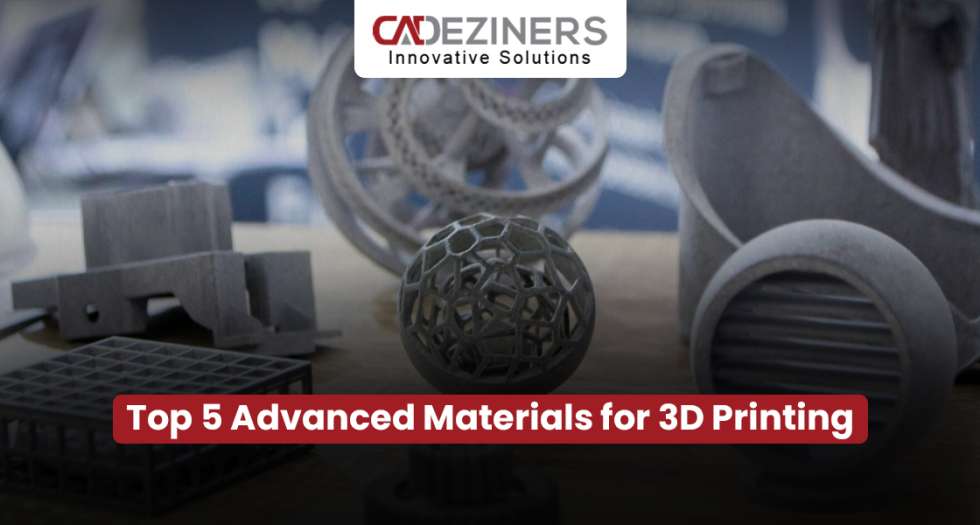
The growing capabilities are largely due to advancements in the materials used for fabrication.
Materials that were once limited to subtractive manufacturing can now be used in additive manufacturing, enabling the creation of parts with superior properties.
Let’s dive into the key categories of advanced materials used in this process: composites, high-performance polymers, high-temperature metals, technical ceramics, and nylon.
1. Composites
Composites are materials made from two or more constituent materials with significantly different properties. In this method, they provide enhanced mechanical strength, reduced weight, and improved thermal and chemical resistance, making them ideal for various applications.
Properties of Composites
➔ Carbon Fibre:
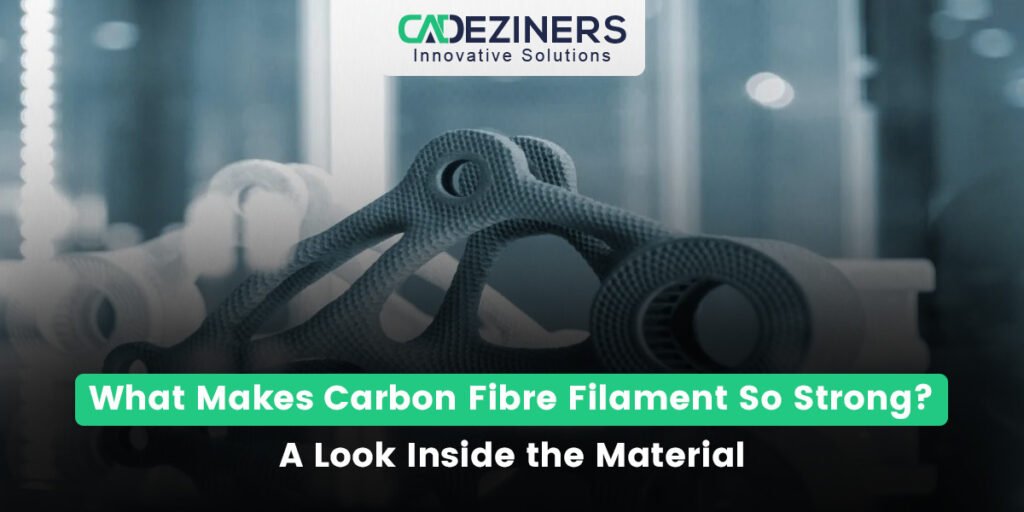
Their composites are incredibly strong and lightweight, making them a popular choice for applications in aerospace, automotive, and sports equipment. The material is known for its high stiffness and strength-to-weight ratio, providing excellent resistance to fatigue and stress.
Chopped Fibre vs. Continuous Fibre:
Carbon fibre can be used in two forms—chopped fibre and continuous fibre. Chopped fibres are short and dispersed throughout the material, providing moderate strength improvements. Continuous fibre, on the other hand, runs the entire length of the part, offering superior strength and stiffness.
➔ Glass Fibre:
Glass fibre is another popular composite material used, valued for its strength and corrosion resistance. It is often used in applications where electrical insulation is needed, such as in electronics or automotive parts.
➔ Kevlar:
Known for its high tensile strength and toughness, Kevlar is used in this process to create impact-resistant and lightweight parts. Its ability to absorb energy makes it a great choice for protective gear, such as helmets and body armour.
Applications of Composites
Composites are increasingly used in industries that require strong yet lightweight parts.
For example, in aerospace, their composites are used to produce lightweight structural components, reducing fuel consumption and increasing payload capacity. In the automotive sector, glass fibre composites are employed to make durable and corrosion-resistant parts.
Opportunities
Enhanced Mechanical Properties: Composites allow for the creation of parts with superior strength-to-weight ratios, making them suitable for high-performance applications.
- Adaptability: The ability to tailor the properties of composites by adjusting fibre content and orientation enables manufacturers to create parts that meet specific performance requirements.
- Cost Efficiency: their composites reduce the need for post-processing and expensive tooling, offering cost savings over traditional manufacturing methods.
Challenges
- Complexity in Printing: The challenge of aligning continuous fibres properly during the process can limit the full potential of composites.
- Material Costs: While composites offer superior performance, the materials used—especially continuous carbon fibre—are expensive, making them less accessible for small-scale production.
- Printer Requirements: Not all printers can handle composite materials, requiring specialised equipment that adds to the cost and complexity of the process.
2. High-Performance Polymers
High-performance polymers are a class of materials that offer superior mechanical, thermal, and chemical properties. They are frequently used in demanding industries such as aerospace, automotive, and healthcare.
Properties of Polymers
➔ Acrylonitrile Butadiene Styrene (ABS):
ABS is a widely used polymer due to its toughness, impact resistance, and ease of processing. It is commonly used for consumer products, automotive components, and toys.
➔ Polylactic Acid (PLA):
PLA is biodegradable and derived from renewable resources, making it a popular choice for eco-friendly applications. While not as strong as ABS, it is easier to print and ideal for prototyping.
➔ Polycarbonate (PC):
Known for its impact resistance and optical clarity, polycarbonate is used in applications where transparency and strength are needed, such as in medical devices or electronic enclosures.
➔ Poly Ether Ether Ketone (PEEK) and Polyetherimide (ULTEM):
These high-performance polymers exhibit excellent resistance to high temperatures, chemicals, and mechanical stress, making them ideal for aerospace and medical applications.
➔ Thermoplastic Elastomers (TPE):
TPE combines the properties of rubber with thermoplastic ease of processing, allowing for the creation of flexible, durable parts used in the automotive and consumer goods industries.
Applications
High-performance polymers are used in applications that require toughness, heat resistance, and chemical stability.
For instance, PEEK and ULTEM are commonly employed in aerospace to manufacture lightweight, high-temperature-resistant parts. In healthcare, these polymers are used to produce medical implants and surgical tools.
Opportunities
- Lightweight and Durable Parts: High-performance polymers allow for the production of strong yet lightweight parts, ideal for industries like aerospace and automotive.
- Biocompatibility: Some polymers, such as PLA and PEEK, are biocompatible, opening up opportunities for use in medical implants and devices.
- High Heat Resistance: Polymers like PEEK and ULTEM can withstand high temperatures, enabling their use in environments where heat tolerance is crucial.
Challenges
- Cost: High-performance polymers like PEEK and ULTEM are expensive, which can limit their widespread use.
- Processing Difficulty: Some polymers require specific environmental conditions, such as high-temperature printing chambers, to prevent warping and ensure proper adhesion.
- Limited Strength Compared to Metals: While polymers offer many benefits, they generally cannot match the strength and durability of metals in high-stress applications.
3. High-Temperature Metals
In applications where polymers and composites fall short, high-temperature metals step in, offering unmatched strength, durability, and heat resistance.
Properties of Metals
High-temperature metals, such as titanium, stainless steel, and Inconel, are prized for their ability to withstand extreme temperatures and mechanical stress.
These metals are typically used in industries that require high-strength parts that operate in harsh conditions, such as aerospace, automotive, and energy.
Applications
High-performance metals are indispensable in various industries due to their exceptional durability and resistance to extreme conditions. In the aerospace sector, titanium and Inconel are commonly used to manufacture parts for jet engines and other high-stress applications, ensuring they can withstand intense pressure and temperature fluctuations.
In the automotive industry, high-temperature metals are essential for creating engine components and exhaust systems that endure extreme heat and mechanical stress.
Similarly, in the energy sector, metals like stainless steel are employed in power plants and the oil and gas industries, where resistance to heat and corrosion is imperative for maintaining operational efficiency and durability.
Opportunities
- Superior Strength: Metals provide superior strength and heat resistance compared to other materials, making them ideal for demanding applications.
- Durability: Metal parts can withstand wear and tear, offering longer service life in high-stress environments.
- Customisation: it allows for the production of complex metal parts that are difficult or impossible to create using traditional manufacturing methods.
Challenges
- Cost and Complexity: Printing with metals is significantly more expensive and complex than using polymers or composites, requiring specialised equipment and expertise.
- Post-Processing: Metal components often require extensive post-processing, including heat treatment and machining, which adds to the overall production time and cost.
- Material Availability: Not all metals can be 3D printed, limiting the material options for manufacturers.
4. Technical Ceramics
Technical ceramics are a class of materials known for their extreme hardness, heat resistance, and ability to function in harsh chemical environments. These materials are widely used in aerospace, electronics, and medical applications.
Properties of Ceramics
➔ Aluminum Nitride (AlN):
Known for its high thermal conductivity, AlN is used in electronics for heat dissipation. It also provides electrical insulation, making it a versatile material for microelectronics and power electronics applications.
➔ Zirconia (ZrO2):
Zirconia is prized for its toughness and resistance to wear, making it ideal for cutting tools and dental implants. Its biocompatibility and aesthetic qualities also make it a popular choice for ceramic crowns in dentistry.
➔ Silicon Nitride (Si3N4) and Silicon Carbide (SiC):
These ceramics are known for their strength, thermal stability, and extreme hardness, making them suitable for high-performance applications such as aerospace and automotive parts. They are also widely used in the manufacturing of bearings, turbines, and other components that endure high stress and temperatures.
➔ Alumina (Al2O3):
Alumina is one of the most widely used ceramics in this process. It offers high electrical insulation and wear resistance, making it ideal for electronic components and mechanical seals. Its chemical resistance and durability also make it suitable for biomedical applications and cutting-edge technologies in semiconductor manufacturing.
Applications of Technical Ceramics
In aerospace, technical ceramics are utilised to manufacture components like turbine blades and heat shields, which can withstand extreme temperatures and mechanical stress.
In the medical field, zirconia is widely used for dental implants and bone replacements because of its biocompatibility and strength.
In the electronics industry, aluminium nitride and silicon carbide are essential for heat sinks, semiconductors, and other applications requiring superior thermal conductivity and electrical insulation.
Additionally, in the automotive sector, silicon nitride is employed in engine components such as bearings and valves due to its high wear resistance and thermal stability.
Opportunities
- Exceptional Performance in Extreme Conditions: Technical ceramics can operate in conditions that other materials, such as metals and polymers, cannot withstand, including high temperatures, corrosive environments, and extreme mechanical stress.
- Lightweight Yet Strong: Despite their lightweight, technical ceramics offer remarkable strength and durability, making them highly desirable for industries like aerospace and automotive.
- High Wear Resistance: Technical ceramics are resistant to abrasion and wear, making them ideal for applications involving heavy-duty machinery and cutting tools.
Challenges
- Brittleness: While ceramics are incredibly strong, they tend to be brittle, which can limit their use in applications where high-impact resistance is necessary.
- Complexity in Processing: Ceramics require high temperatures and precise conditions, making them challenging to process and expensive to manufacture.
- Material Cost: The raw materials used to create technical ceramics are often expensive, limiting their widespread adoption in more cost-sensitive industries.
5. Nylon
Nylon printing in Australia has gained significant attention in the additive manufacturing world due to its versatility and performance.
Nylon, a type of polyamide, is known for its strength, flexibility, and durability, making it a popular choice for various applications in various industries.
Properties
- Strength: Nylon has high tensile strength, making it capable of withstanding significant stress without deformation.
- Flexibility: It offers excellent flexibility, allowing for the creation of parts that can bend without breaking.
- Durability: Nylon is highly resistant to wear and tear, which contributes to its longevity in demanding applications.
- Chemical Resistance: It has good resistance to chemicals, including oils and solvents, enhancing its suitability for industrial use.
- Low Friction: Nylon has a low coefficient of friction, making it ideal for moving parts and components that require smooth operation.
Application
It is extensively used in industries such as automotive, aerospace, and consumer goods due to its superior mechanical properties.
In the automotive sector, nylon parts are used for functional prototypes, custom fixtures, and end-use components like brackets and housings.
Aerospace applications include creating lightweight yet durable parts, such as complex geometries for fuel systems or interior components.
Additionally, in consumer goods, nylon is used for manufacturing everything from durable sporting equipment to ergonomic tools and household items. Its ability to be printed with intricate details and functional strength makes it a versatile material for both prototyping and production.
Opportunities
- Cost-Effective Prototyping: Nylon’s strength and flexibility make it an excellent material for prototyping, reducing the need for expensive tooling and allowing for rapid iteration.
- Customisable Parts: Its adaptability enables the creation of customised parts and components tailored to specific needs or applications.
- Durability in End-Use Applications: The material’s durability extends its use from prototypes to final products, offering long-term performance in various industries.
Challenges
- Moisture Absorption: Nylon tends to absorb moisture from the air, which can affect its printing properties and final performance.
- Print Warping: Due to its thermal properties, nylon can experience warping during the printing process, which requires careful temperature management.
- Post-Processing Needs: Parts often require post-processing to improve surface finish and mechanical properties, adding to the overall production time.
Experience Innovation with us!