
How Australian Schools Are Using 3D Printing to Drive STEM Innovation
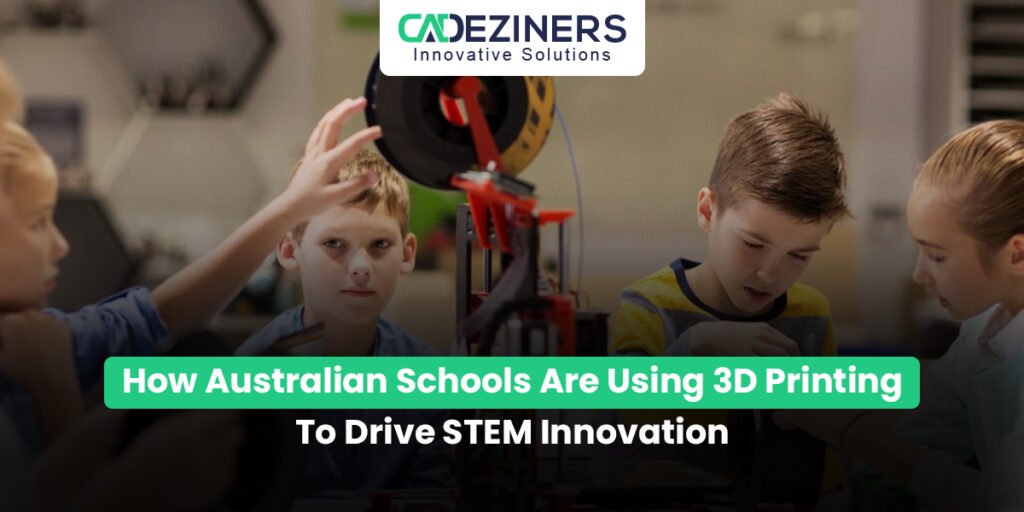
In classrooms across New South Wales, a quiet revolution is taking place. Teachers and students are embracing this technology as a powerful tool to bring abstract ideas into the physical world. This technology allows young learners to design, create, and test their own solutions, making STEM subjects more accessible and engaging than ever before.
Schools in NSW are integrating it into everyday lessons, helping students develop critical skills for the future. From primary schools in Sydney’s suburbs to regional areas, educators are seeing real benefits in student motivation and understanding.
The Rise of Additive Manufacturing in NSW Education
The NSW Department of Education has long supported digital technologies in learning. Programmes aligned with the Australian curriculum encourage hands-on experiences in science, technology, engineering, and mathematics. 3D printing STEM activities are well-suited here, as they connect theory and practice.
In recent years, initiatives have expanded access to this technology. Partnerships with organisations such as Makers Empire have provided professional development and resources to many public and Catholic schools. Teachers receive training to confidently introduce 3D design and printing, ensuring activities align with syllabus requirements.
One key focus is on maker pedagogies. These approaches encourage students to experiment, fail, and improve. Research from projects involving Macquarie University and the NSW Department of Education shows that such methods enhance critical thinking and creativity in early primary years.
How It Enhances Classroom Learning
3D printing classroom activities transform traditional lessons. Students start by using simple software to model objects. They then print their designs, often using safe, biodegradable materials.
This process teaches problem-solving. When a model doesn’t work as planned, students analyse why and make adjustments. It builds resilience and encourages iteration, skills valued in modern workplaces.
In subjects like science, students print models of molecules or biological structures. In mathematics, they create geometric shapes to explore volume and surface area. Engineering challenges involve designing bridges or tools that solve real problems.
For students with vision impairment, the NSW Braille and Large Print Services team produces tactile 3D models. These cover anatomy, geography, and history, allowing all learners to engage equally. This inclusive approach strengthens classroom collaboration.
Schools also use this technology for cross-curricular projects. History students recreate ancient artefacts, while geography classes print landforms. These activities make learning memorable and relevant.
Some Examples from NSW Schools
Several NSW schools have led the way.
- In Sydney, public schools like Carlingford West, Parramatta East, and Oatlands participated in the Maker Pedagogy Network Project. Teachers and students showcased designs addressing real-world challenges.
- Catholic primary schools in the area have joined similar programmes. Groups of five or more schools collaborate on 3D-printing teaching units focused on design thinking. Students design solutions to community issues, such as sustainable products or disaster-resilient structures.
- In regional NSW, schools such as Bingara Central have used grants from programmes such as the GE Additive Education Program to purchase printers. Teachers with limited prior experience quickly became confident users.
- More recent efforts include the Space Discovery program. In 2024 and 2025, primary schools across NSW received printers and space-themed challenges. These prepare students for industries associated with events such as the International Astronautical Congress in Sydney.
- The Naturally Brave initiative supports schools in bushfire or flood-affected areas. It combines 3D technology with resilience-building to help students process experiences through creative design.
Numerous educational institutions rely on reliable tools and knowledge. For example, if you’re seeking professional help with designs or prototypes, consider a 3D printing service in Sydney. We provide expert support to help schools bring their projects to life.
Benefits for Students and Teachers
The impact is clear. Students gain practical skills in digital design and manufacturing. They learn to use tools that are increasingly common in industries. Teachers report higher engagement. Hands-on printing motivates reluctant learners and allows differentiation for various abilities. These activities support the National STEM School Education Strategy. They connect learning to real life, preparing students for future careers where innovation is essential.
Challenges and the Path Forward
We know that progress is strong; challenges remain. Not every school has immediate access to printers or training. Costs and technical support can be barriers in some areas. However, government funding, partnerships, and falling equipment prices are changing this.
More schools are adopting the technology each year. Looking ahead, NSW educators continue to explore new applications. From advanced manufacturing to inclusive resources, this technology will play a growing role.
If you need an affordable 3D printing service in Melbourne for a school project, we provide reliable support to meet your design capabilities with physical prototypes.
FAQ'S
What age groups benefit most from this technology in NSW schools?
Do teachers need special training to use it?
How does additive manufacturing support inclusive education?
What materials are commonly used in school 3D printers?
Final Thoughts
Australian schools, particularly in New South Wales, are using it to inspire the next generation of innovators. This technology makes STEM subjects dynamic and inclusive, equipping students with skills they will need in a rapidly changing world. As more classrooms adopt these tools, the future of education looks brighter and more hands-on.
Recent Posts
-
Kényelmes_szórakozás_és_nagyszerű_nyerési_esélyek_a_https_the-nv-casinos-07 Sep 2026
-
Aktuelle_Casino-Angebote_und_Bewertungen_finden_Sie_bei_https_thebets24-casinos--5869117907 Sep 2026
-
Exceptional_bonuses_and_vegashero_offer_thrilling_online_casino_experiences07 Sep 2026
-
Estrategias seguras y rentables con bet on win para maximizar tus ganancias deportivas06 Sep 2026
-
Kiváló tippek a bet match maximalizálásához és a sportfogadásokhoz06 Sep 2026