
The Advantages of Lightweight 3D Printed Components in Aerospace
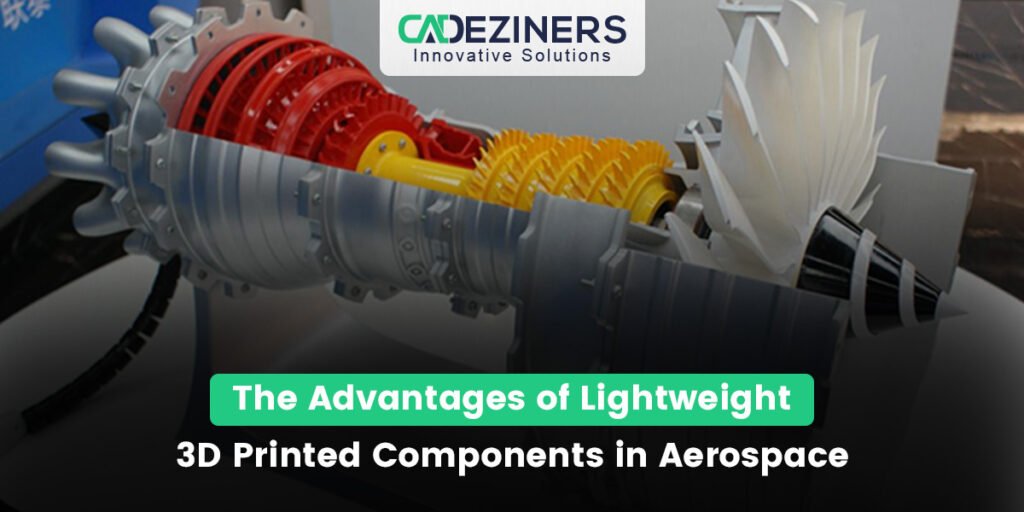
The aerospace industry aims to improve efficiency, safety, and performance. One key method is reducing aircraft weight, which lowers fuel use and enhances performance. Additive manufacturing, or 3D printing, has become popular for producing lighter, stronger parts. This technology builds components layer by layer, making them more efficient and optimised. As more companies adopt 3D printing, it’s increasingly common in modern aviation.
This article explores the major advantages of lightweight 3D-printed components in aerospace and explains why the technology is becoming essential to future aircraft design.
Understanding Lightweight Design in Aerospace
Weight plays a critical role in aircraft performance. Even small reductions can lead to measurable improvements in fuel efficiency and operational range.
Why Aircraft Weight Matters
Reducing aircraft mass improves several operational factors. A lighter aircraft typically requires less fuel to operate, which lowers operating costs and reduces environmental impact. Weight reduction can also improve payload capacity and extend flight range.
For aerospace manufacturers, achieving effective aircraft weight reduction is a continuous engineering objective. Lightweight materials, advanced structural design, and modern manufacturing methods all contribute to this goal.
The Role of Additive Manufacturing
3D printing enables the creation of highly optimised structures that are difficult or impossible to produce using conventional methods. Engineers can remove unnecessary material while maintaining structural strength, which results in lighter yet durable parts.
This capability makes additive manufacturing particularly valuable for producing complex aerospace components such as brackets, housings, ducts, and structural supports.
Advantages of Lightweight 3D Printed Aerospace Parts
Go through these advantages of lightweight 3D printed aerospace parts. Read about them below:
Improved Fuel Efficiency
One of the most important benefits of lightweight components is improved fuel efficiency. Aircraft consume fuel based on weight, aerodynamic performance, and engine efficiency.
When manufacturers substitute conventional parts with 3D-printed aerospace components, they often realise substantial reductions in component weight. Throughout an aircraft’s lifespan, even minor decreases can result in notable fuel savings.
Improved fuel efficiency also supports environmental sustainability goals by reducing greenhouse gas emissions associated with aviation.
Enhanced Design Flexibility
Traditional manufacturing methods often restrict the complexity of part designs. Machining, casting, and forging require specific shapes and tooling constraints.
3D printing removes many of these limitations. Engineers can create intricate geometries that optimise strength while minimising material usage. Internal lattice structures, hollow channels, and integrated features can all be incorporated into a single component.
This design flexibility allows manufacturers to develop highly efficient aerospace components that meet strict performance requirements without unnecessary weight.
Part Consolidation and Reduced Assembly
Another advantage of additive manufacturing is the ability to combine multiple components into a single printed structure.
In traditional manufacturing, a complex assembly may require several individual parts connected with fasteners or welds. With 3D printing, engineers can redesign the assembly as a single integrated part.
This process reduces assembly complexity, minimises potential failure points, and lowers maintenance requirements. It also contributes to weight reduction in aircraft because fewer fasteners and connectors are required.
Manufacturing Efficiency and Rapid Prototyping
3D printing speeds up aerospace manufacturing by enabling rapid design changes and prototyping, while reducing waste.
Faster Development Cycles
Aerospace manufacturing traditionally involves lengthy development cycles due to complex tooling and testing requirements. 3D printing simplifies this process by enabling engineers to quickly produce prototypes and evaluate design performance. Rapid prototyping accelerates research and development, enabling aerospace companies to refine designs and test new concepts efficiently.
If your organisation is developing innovative aviation design, access to a reliable 3D printing service in Sydney can expedite the process. CAD Deziners help engineers quickly and accurately turn digital designs into functional prototypes. Get in touch with us to learn more!
Reduced Material Waste
Conventional manufacturing methods often remove large amounts of material during machining. This subtractive approach can lead to significant waste, particularly when working with expensive aerospace-grade metals.
Additive manufacturing builds components layer by layer using only the required material. This efficient use of resources reduces waste and improves overall manufacturing sustainability.
For industries focused on both performance and environmental responsibility, this material efficiency is an important advantage.
Improved Structural Performance
3D-printed components in aerospace can significantly improve structural performance.
Optimised Load Distribution
Advanced software tools enable engineers to perform topology optimisation during the design phase. These tools analyse how forces are distributed within a structure and identify areas where material can be reduced without compromising strength.
Using these techniques, designers can create lightweight structures that distribute loads efficiently. As a result, 3D-printed aerospace parts often provide strong mechanical performance while maintaining minimal weight.
Durability and Reliability
Modern additive manufacturing technologies support a variety of aerospace-grade materials, including titanium alloys, aluminium alloys, and high-performance polymers.
These materials provide excellent strength-to-weight ratios and corrosion resistance, making them suitable for demanding aerospace environments. As a result, lightweight aerospace components produced through 3D printing can meet strict industry standards for durability and reliability.
Supply Chain and Production Advantages
Producing and supplying 3D-printed components offers unique advantages. Learn more about them:
On-Demand Manufacturing
3D printing allows manufacturers to produce components as needed rather than maintaining large inventories. Digital design files can be stored and reproduced whenever required. This capability reduces storage requirements and simplifies logistics across global aerospace supply chains.
Support for Maintenance and Replacement Parts
Aircraft maintenance often requires specialised replacement parts that may no longer be produced through conventional methods. Additive manufacturing enables manufacturers to reproduce legacy components or create improved replacements. This flexibility supports long-term aircraft maintenance and operational efficiency.
If you need professional 3D printing service in Melbourne for accurate prototyping, CAD Deziners offers aerospace companies the expertise they need to ensure precision production of complex components. We take specific measures to maintain high-quality standards required for aerospace applications.
Challenges and Considerations
Despite its advantages, additive manufacturing in aerospace must meet strict certification and quality control requirements.
Regulatory authorities require extensive testing to ensure that printed components meet safety and performance standards. Engineers must carefully validate materials, printing processes, and mechanical properties before parts are approved for flight applications.
However, as technology advances and industry standards evolve, additive manufacturing continues to gain wider acceptance across aerospace manufacturing.
Final Thoughts
Additive manufacturing has become an important innovation in modern aerospace engineering. By enabling advanced design optimisation and efficient production methods, 3D printing allows manufacturers to create lightweight yet durable aerospace components that support improved aircraft performance.
The advantages of 3D printed aerospace parts, ranging from fuel efficiency and structural optimisation to supply chain flexibility, are transforming aircraft system design and manufacturing. As technology progresses, additive manufacturing is expected to further contribute to reducing aircraft weight and shaping the future of aeronautics and aviation.
Recent Posts
-
 How 3D Printing Is Transforming Custom Medical Devices19 Mar 2026
 -
The Advantages of Lightweight 3D Printed Components in Aerospace18 Mar 2026
-
 What Makes Carbon Fibre Filament So Strong? A Look Inside the Material17 Mar 2026
 -
 Why 3D Printed Exhibition Models Are Essential for Trade Show Success16 Mar 2026
 -
 How the Entertainment Industry Uses 3D Printing for Faster Props, Costumes & Sets26 Feb 2026